 Grandma's Recipes
  山口県
山口県 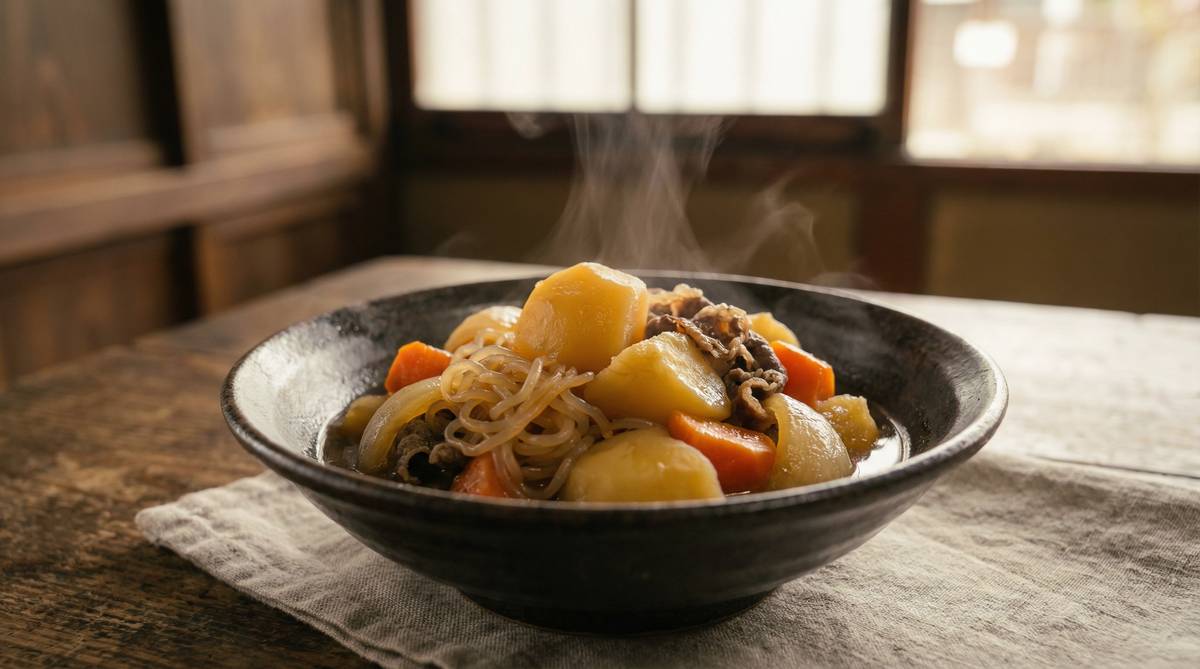 * Photo is for reference
 島根県 🌸 Spring · Summer · Autumn · Winter
Japanese Grandma's Nikujaga with Beef (Shimane-Style)
This nikujaga from Shimane Prefecture uses beef, as is typical in western Japan. The secret lies in adding sweet seasonings first and letting the dish rest to deepen its flavor. Grandma never used measuring spoons, yet it always tasted the same.
🧂 Ingredients
servings
* In traditional Japanese grandma cooking, measurements are approximate — think of them as guidelines rather than exact amounts.
| Main Ingredients | |
| Potatoes | a bit more than the number of people (Medium size, 5-6 pieces) |
| Onions | enough to spread across the pot |
| Carrot | enough to add color |
| Beef, thinly sliced | don't be stingy |
| Shirataki (konjac noodles) | one bag |
| Seasonings | |
| Soy sauce | one swirl around the pot (About 3 tablespoons) |
| Sugar | enough to taste the sweetness (About 2 tablespoons) |
| Mirin (sweet rice wine) | a splash (About 2 tablespoons) |
| Sake (cooking rice wine) | a dash (About 2 tablespoons) |
| Water | until the ingredients just peek out |
| Oil | a thin layer on the pot bottom (About 1 tablespoon) |
👩🍳 Instructions
- 1
Peel the potatoes, cut into large pieces, and soak in water. Cut carrots into rolling wedges, onions into wedges. Parboil the shirataki noodles and cut into manageable lengths.
- 2
Heat oil in a pot over medium heat and stir-fry the beef first.
💡 Grandma said 'just until it changes color is fine.'
- 3
Add onions and carrots, stir-fry lightly until coated in oil, then add potatoes and shirataki.
- 4
Add water so the ingredients are barely peeking out. Once boiling, skim off any foam.
- 5
Add seasonings in this order: sugar, sake, mirin, then soy sauce.
💡 Grandma's teaching: 'Adding sweet things first helps the flavor soak in.'
- 6
Place a drop lid on top, then simmer on medium-low heat for 15-20 minutes. Shake the pot occasionally to prevent sticking.
- 7
Once the potatoes are tender, turn off the heat and let it rest to allow flavors to meld. Gently reheat before serving for even better taste.
💡 Don't overcook or the potatoes will fall apart. Letting it cool once helps the flavors absorb.
📖 Memories & Stories
On nikujaga days, the sweet soy sauce aroma would fill the kitchen, and I'd immediately know what was for dinner. Grandma would laugh and say 'the flavor hasn't set yet, be patient' when I tried to sneak a taste. The next day's nikujaga was even more flavorful, and the whole family looked forward to it. It's a simple dish, but whenever the family gathered, it would naturally appear on the table -- the ultimate comfort food.
Source: Learned directly from grandmaGrandma's handwritten recipe notes still exist (Submitted by: なな)
🍽 Cultural Background
Nikujaga is one of Japan's most representative home-cooked dishes, said to have been created in the Meiji era. In western Japan, beef is the traditional choice, and Shimane is no exception. The technique of adding seasonings in a specific order and resting the dish to let flavors absorb reflects wisdom passed down through generations.