 Grandma's Recipes
  京都府
京都府 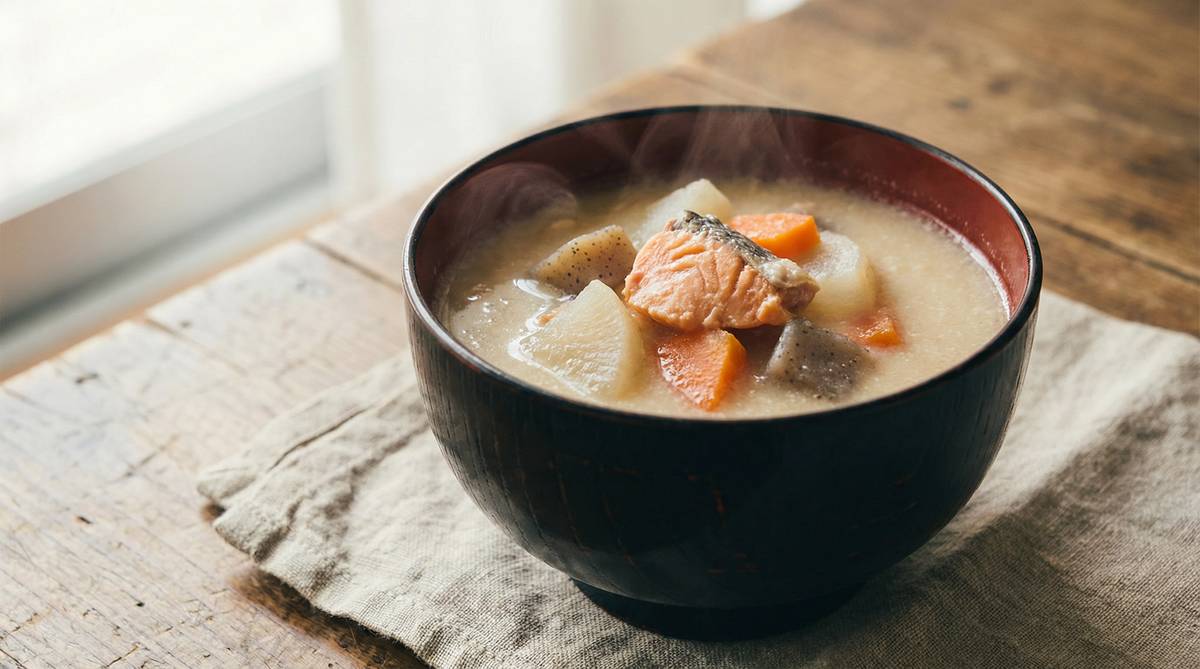 * Photo is for reference
 兵庫県 ⛄ Winter
Japanese Grandma's Sake Lees Soup with Salmon (Kasujiru)
Kasujiru is a warming winter soup made with sake lees (kasu), beloved across the Kansai region. Hyogo Prefecture, home to the famous Nada Gogou sake district, has deep ties to this soup. The combination of rich sake lees and salted salmon creates a deeply comforting bowl.
🧂 Ingredients
servings
* In traditional Japanese grandma cooking, measurements are approximate — think of them as guidelines rather than exact amounts.
| Main Ingredients | |
| Daikon radish | cut thin and plenty of it (Thinly sliced quarter-rounds) |
| Carrot | just a little for color (Thinly sliced quarter-rounds) |
| Konnyaku (konjac) | tearing by hand lets the flavor soak in better (Tear by hand) |
| Salted salmon | it gives great flavor, put it in |
| Green onion (Negi) | sprinkle on at the end (Chopped, for garnish) |
| Seasonings & Stock | |
| Sake lees (Sakekasu) | taste as you go and add as much as you like (120-150g. Dissolve in a separate bowl with some dashi before adding) |
| Miso | just a hint (About 1 tablespoon) |
| Dashi stock | fill the pot generously |
👩🍳 Instructions
- 1
Cut daikon and carrot into thin quarter-rounds. Tear the konnyaku into pieces by hand.
💡 Tearing konnyaku by hand helps it absorb flavor better.
- 2
Add dashi to the pot and simmer the daikon, carrot, and konnyaku over medium heat.
💡 Grandma always said: 'Don't rush root vegetables -- cook them slow and gentle.'
- 3
Once the vegetables are slightly tender, add the salmon and continue simmering.
- 4
Dissolve the sake lees in a separate bowl with a little dashi, then gradually add it to the pot.
💡 Grandma always warned: 'If you dump it all in at once, it'll get lumpy, so be careful.'
- 5
Dissolve the miso into the soup and adjust the seasoning.
- 6
Scatter chopped green onions on top to finish.
💡 Warming gently on low heat at the end brings the flavors together beautifully.
📖 Memories & Stories
In winter, grandma's kitchen was always filled with the sweet aroma of sake lees. Her glasses would fog up from the steam rising from the big pot, and she'd laugh saying 'I can't see!' while taste-testing. When we came home looking cold, we'd hear her kind voice through the steam saying 'eat this and you'll warm right up!' It was packed with ingredients, and by the time we finished, we were warm to our core, feeling as safe as being wrapped in grandma's arms. Even now, when I smell kasujiru, I'm transported back to those winter evenings and grandma's smile.
Source: Learned directly from grandmaWritten from memory (Submitted by: ゆうちゃん)
🍽 Cultural Background
Kasujiru has been a beloved winter soup particularly in the Kansai region, where sake brewing is deeply rooted. Hyogo's Nada Gogou district is renowned as one of Japan's top sake-producing areas, and using fresh sake lees from the new brewing season to make kasujiru is a winter tradition. Adding salted salmon is a characteristic Kansai touch.