 Grandma's Recipes
 Traditional Kyushu Home Cooking | Grandma's Southern Japanese Recipes
Sweet, rich flavors nurtured by the warm climate of southern Japan
Kyushu cuisine is known for its characteristically sweet flavor profile. Compared to eastern Japan, cooks in Kyushu use soy sauce and sugar more generously. Here we introduce the home-style dishes that grandmothers across this warm, bountiful region have been making for generations.
The Food Culture of Kyushu
Kyushu, the southernmost of Japan's four main islands, is made up of seven prefectures: Fukuoka, Saga, Nagasaki, Kumamoto, Oita, Miyazaki, and Kagoshima.
Each has its own distinctive food culture.
The defining characteristic across the region is a preference for sweeter flavors.
Sweet soy sauce is the standard, and simmered dishes tend to be generously seasoned with sugar and mirin.
This sweetness is said to reflect both a sugar culture that developed in the warm climate and the influence of historical trade routes with Southeast Asia and Europe.
Pork, chicken, seafood, and sweet potatoes -- Kyushu kitchens have always been blessed with abundant ingredients.
Here we introduce the home-cooked dishes that Kyushu grandmothers have passed down through the generations.
Fukuoka | Gameni (Chikuzen-ni)
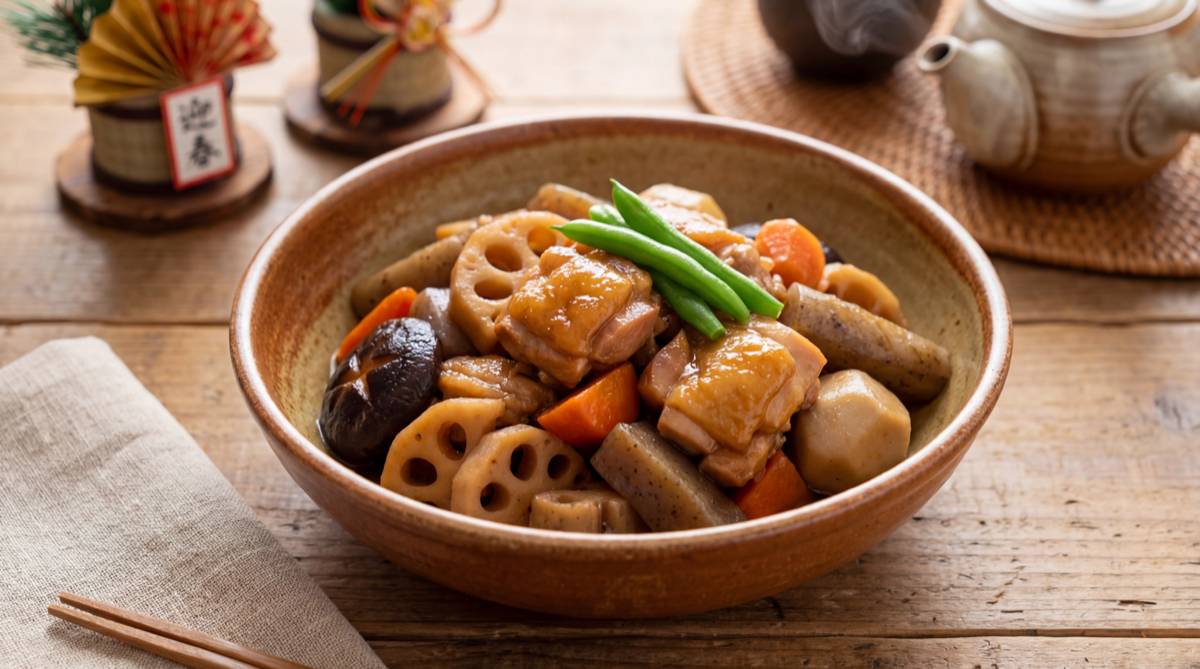
This is Fukuoka's signature regional dish, known nationwide as "chikuzen-ni" or braised chicken with root vegetables.
The name "gameni" is said to come from the Hakata dialect word "gamekuri-komu," meaning "to gather everything together."
Chicken, burdock root, lotus root, taro, and konnyaku are first stir-fried then simmered together in a rich, sweet-savory sauce.
It is an essential dish for New Year celebrations and other special occasions in Kyushu.
Fukuoka | Kashiwameshi (Chicken Rice)
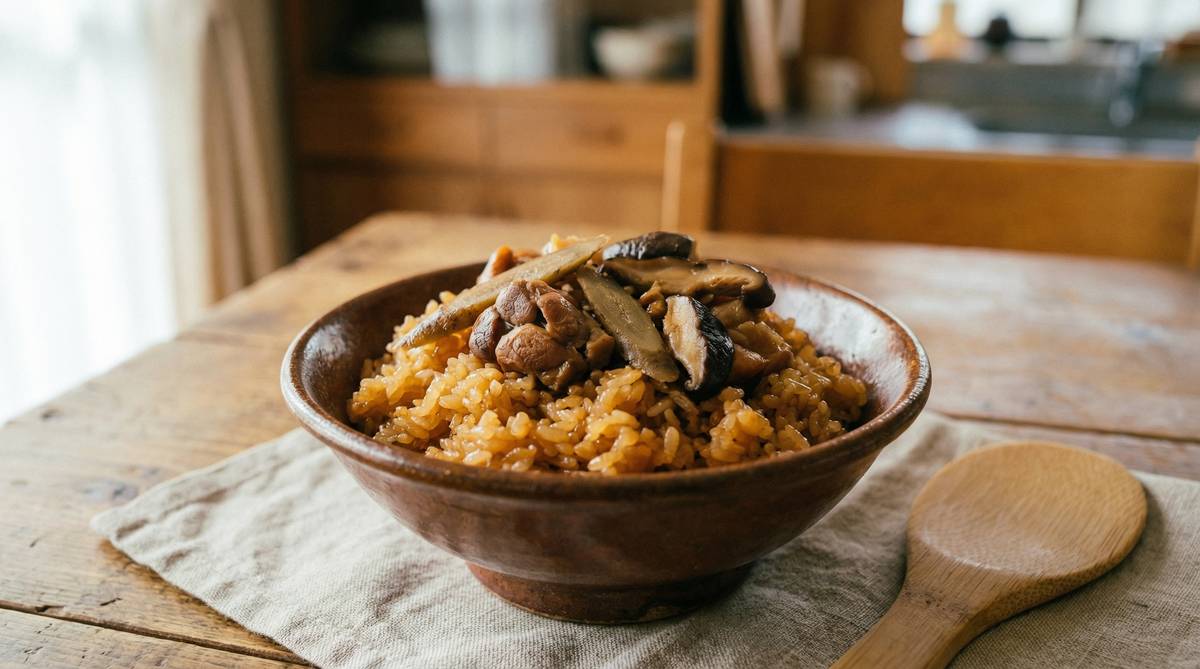
In Kyushu, chicken is called "kashiwa." Kashiwameshi is a seasoned rice dish cooked with chicken and vegetables, beloved as everyday home cooking in the Chikuho area of Fukuoka.
It is also famous as an ekiben (train station bento). The combination of sweet-savory chicken soboro and steamed rice evokes the nostalgic taste of grandma's kitchen.
Kumamoto | Daikon and Egg Drop
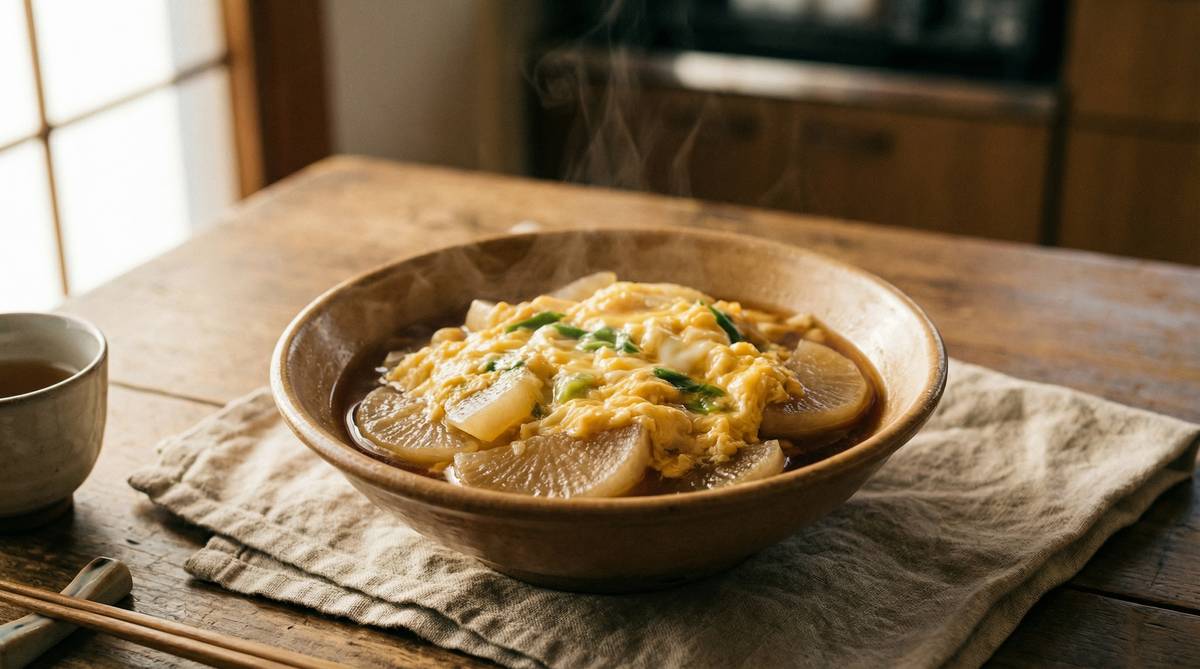
Thinly sliced daikon radish simmered in dashi broth, then finished with beaten egg -- a simple, comforting dish.
This is the kind of understated home cooking that Kumamoto grandmothers made regularly for their families.
The natural sweetness of daikon paired with the gentle richness of egg goes perfectly with steamed rice.
Kagoshima | Sweet Potato Kakiage Tempura
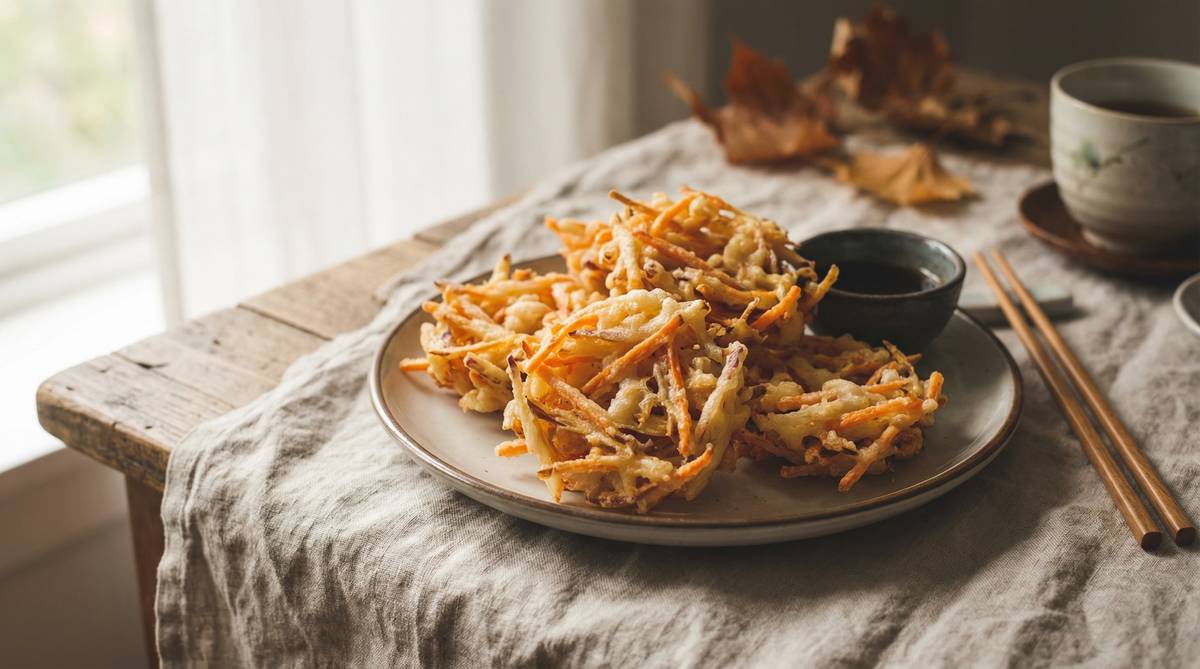
A specialty from Kagoshima, the home of Japanese sweet potatoes (satsumaimo).
These subtly sweet tempura fritters work equally well as a snack or a side dish.
Grandma's secret was to keep the batter thin and fry them until perfectly crispy.
Miyazaki | Hiyajiru with Extra Tofu
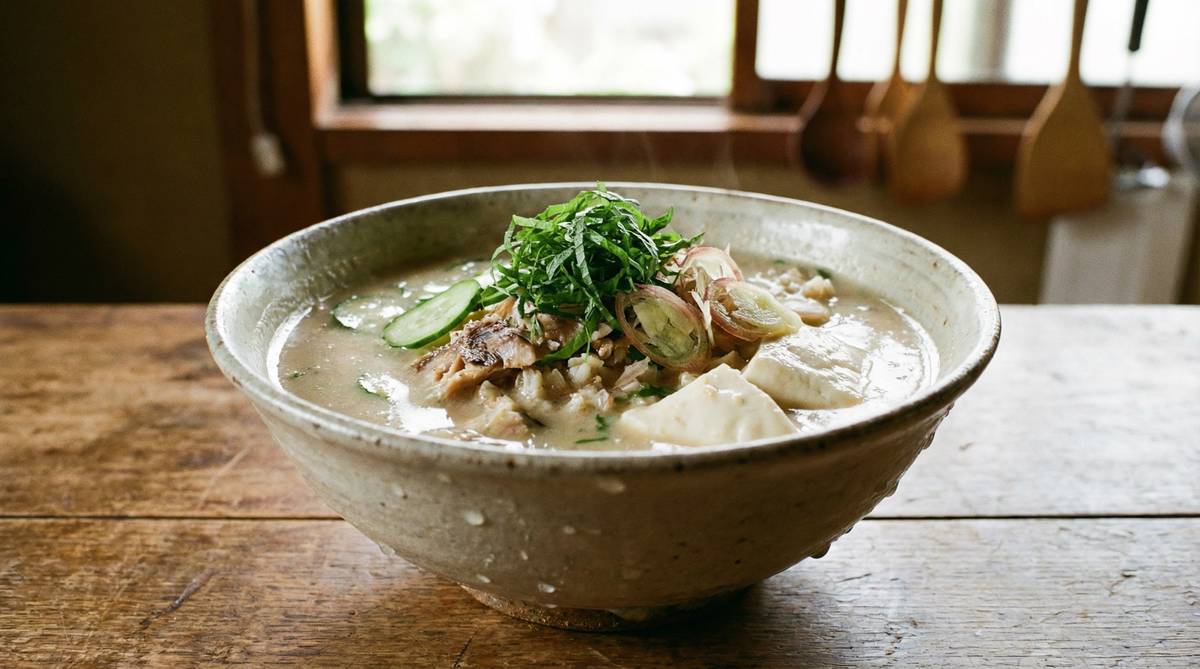
Hiyajiru is the quintessential summer dish of Miyazaki.
Grilled fish and miso are ground together into a cold broth that is poured over rice -- a refreshing meal that revives the body after a long day of farm work.
"Oi-dofu" means adding extra tofu as a finishing touch.
The silky tofu makes the cold soup even creamier and more satisfying.
Oita | Simmered Zenmai Fern
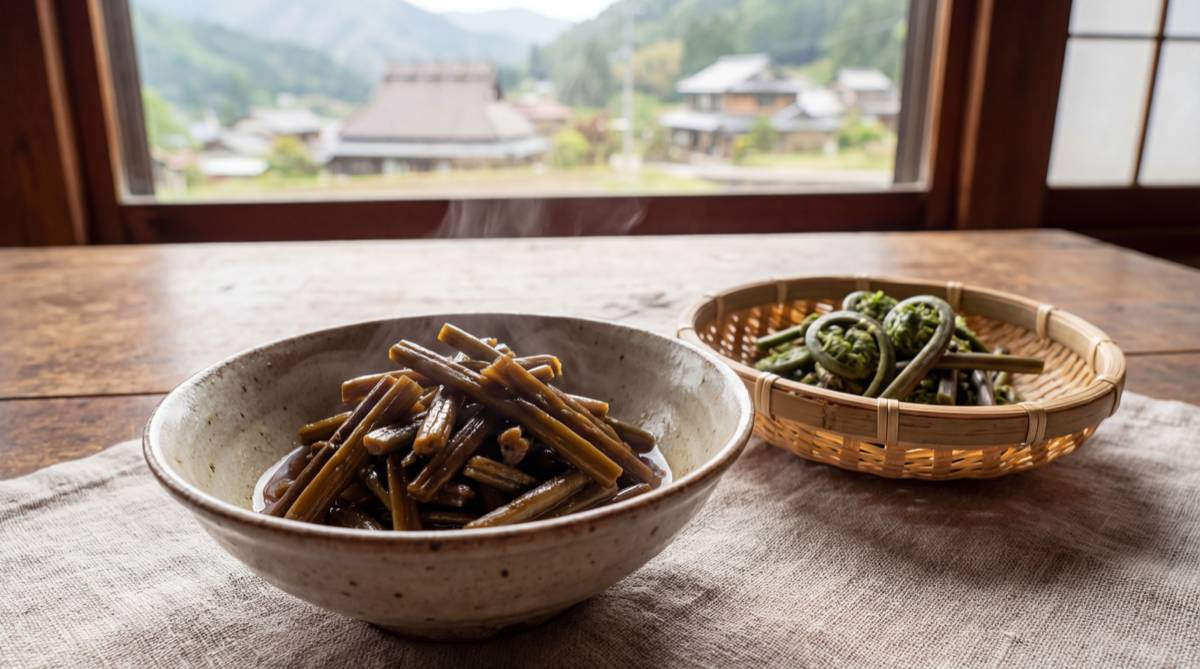
In the mountain villages of Oita, spring was the time to harvest zenmai (royal fern), which was then dried and preserved to eat throughout the year.
Rehydrated zenmai simmered with fried tofu (aburaage) makes a deeply savory dish that pairs beautifully with rice or works perfectly in a bento box.
What Kyushu Kitchens Have in Common
Although ingredients and seasonings vary across Kyushu's prefectures, one thing remains constant: the spirit of cooking with care for those who will eat the food.
Between farm chores, after returning from the sea, passing on recipes learned in a new family after marriage -- grandmothers have preserved Kyushu's food culture through these quiet, everyday acts of love.
What country grandmothers ate every day -->
Guide to regional Japanese home cooking -->