 Grandma's Recipes
 How to Fix Overly Salty Takuan | Salt-Reduction and Recipe Ideas
Don't throw it away -- salty takuan just needs a different approach
Your homemade takuan came out too salty to eat plain. But there's no need to waste it. From simple salt-soaking to cooking ideas that turn saltiness into seasoning, here are grandma-approved solutions.
You made takuan and it came out too salty.
This happens often with homemade takuan. A little too much salt in the bran mixture, or the pickling time was too short for the flavors to mellow. Compared to commercial products, traditional homemade takuan is naturally saltier -- that's actually a feature, not a bug.
But "salty" doesn't mean "ruined." With a simple soak in water, the salt comes right down. And if it's still too intense, use it as a seasoning ingredient in cooking.
Grandma used to say, "If it's salty, soak it. If that doesn't work, cook it."
How to Reduce Salt in Takuan
Salty takuan can be de-salted simply by soaking in water.
Basic method:
1. Slice the takuan thin (3-5mm rounds). Thinner slices release salt faster.
2. Place in a bowl and cover generously with water.
3. Soak for 30 minutes to 1 hour. Change the water once midway for better results.
4. Taste-test. When the saltiness is right, drain well.
Tips:
- Always slice before soaking -- whole pieces barely lose any salt.
- Don't soak too long or the umami washes out too. Taste-check frequently.
- Stop at "still a tiny bit salty" -- when eaten with rice, too-mild takuan feels bland.
Cooking Ideas for Salty Takuan
If soaking isn't enough, or the texture has changed, cooking is the answer. The takuan's saltiness becomes built-in seasoning.
Fried Rice
Finely dice salty takuan and add to fried rice. The crunch and salt substitute for seasoning, letting you skip the soy sauce. Just add green onion and egg for a complete takuan fried rice.
Stir-Fries
Julienne the takuan and stir-fry with aburaage (fried tofu) or mushrooms. Sesame oil adds a toasty note. Often, the takuan's salt is all the seasoning you need.
Ochazuke (Tea-Over-Rice)
Lay thin takuan slices on hot ochazuke. The tea dilutes the saltiness to just the right level. Simple, but this was grandma's go-to late-night snack.
Simmered Dish
Simmering old or overly salty takuan in a sweet-savory broth is a traditional technique found in regions like Hokuriku.
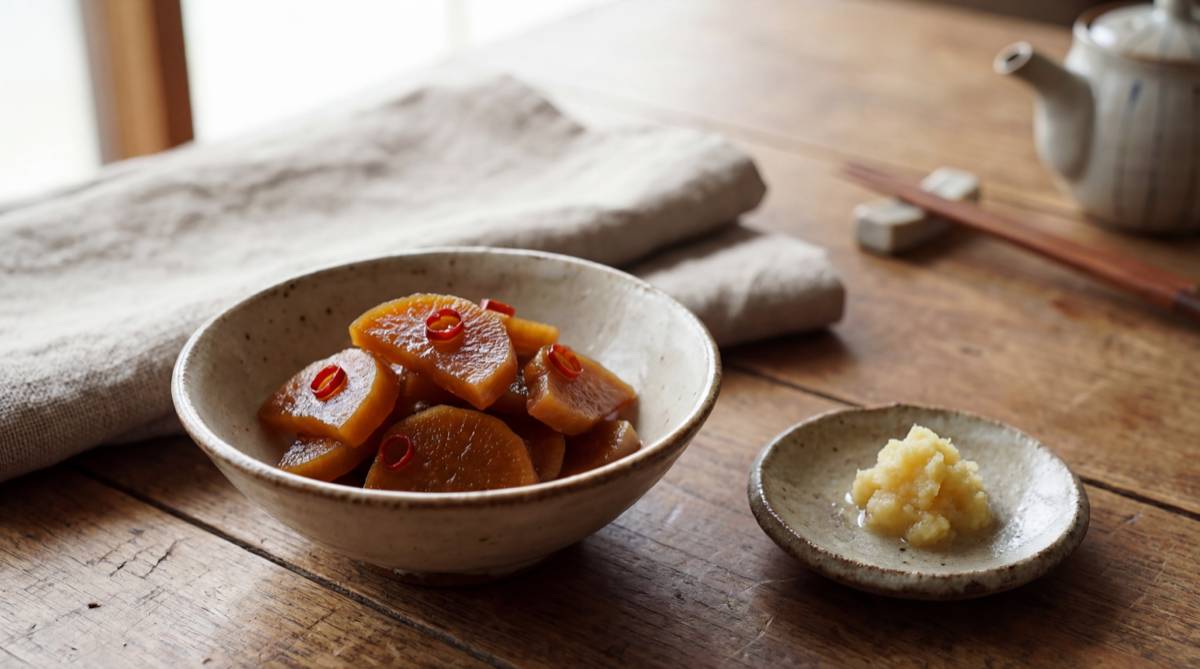
Soak first to reduce salt, then simmer in dashi, soy sauce, and sugar until tender. Works for sour aged takuan too -- a truly versatile rescue method.
Why Does Takuan Get Too Salty?
For next time, understanding the causes helps prevent it:
- Too much salt: The target is 5-6% of dried daikon weight. Above 7% will taste very salty.
- Pickled too briefly: Fresh-pickled takuan has sharp saltiness. After 1+ month of fermentation, sourness develops and rounds out the salt.
- Over-dried daikon: Excessively dried radish concentrates the salt sensation.
For the complete takuan-making guide with correct salt ratios, see our main article.
Frequently Asked Questions
Q. Won't soaking wash out all the flavor?
Not if you keep it to under an hour and taste-test along the way. Pull the takuan when it's "just slightly salty" -- that's the sweet spot.
Q. Does de-salted takuan keep as long?
No. Removing salt reduces preservation power. Keep de-salted takuan refrigerated and eat within 2-3 days.
Q. How do I prevent saltiness from the start?
Measure your salt carefully: 5-6% of the dried daikon's weight. If you're uncertain, a kitchen scale removes the guesswork.
Summary
Salty takuan is not a failure.
- Soak in water to reduce salt
- Use in cooking where saltiness becomes seasoning
- Simmer for a completely different -- and delicious -- result
In grandma's kitchen, salty things were soaked and sour things were simmered. The wisdom of never wasting food was always close at hand.