 Grandma's Recipes
 How to Store Homemade Takuan | Refrigerating, Freezing, and Shelf Life Guide
Keep your handmade takuan delicious down to the very last slice
Homemade takuan can turn overly sour or develop mold if stored incorrectly. Here's a clear guide to room temperature, refrigerator, and freezer storage -- with shelf life estimates and tips for when sourness creeps in.
How long does homemade takuan last?
Grandma would eat her autumn-pickled takuan well into the following spring. In an era without refrigerators, the power of salt and bran alone could preserve food for months -- a testament to ancestral wisdom.
This article organizes takuan storage methods by type: room temperature, refrigerator, and freezer. We also cover what to do when sourness gets too strong, so you can enjoy every last slice.
Room Temperature Storage (In the Pickling Barrel)
During winter, the simplest approach is to leave the takuan in its barrel in a cool spot.
- Best locations: Entryway, hallway, north-facing room. Fine if temperatures stay below 10C (50F).
- Shelf life estimate: 3-6 months from pickling. Higher salt content can extend this further.
- Watch out for: Rising temperatures in spring accelerate fermentation. Increasing sourness is the signal to move to refrigeration.
Grandma kept her barrel in a kitchen corner. "Be careful once it warms up," she'd say.
Refrigerator Storage
As temperatures climb, the refrigerator is your friend.
- Method: Remove only what you'll eat, brush off excess bran, wrap in plastic wrap, and place in a sealed container or zip-lock bag in the vegetable drawer.
- Shelf life estimate: 2-3 weeks refrigerated.
- Tip: Storing with bran still attached makes the fridge smell. Portion out small amounts as needed.
Storing the whole barrel in the fridge isn't practical, so for excess takuan, freezing is the way to go.
Freezer Storage
For long-term storage, freezing is reliable.
- Method: Cut takuan into eating-sized pieces, wrap individual portions in plastic wrap, then place in a freezer bag.
- Shelf life estimate: About 2-3 months frozen.
- Thawing: Defrost in the refrigerator. If in a hurry, use running water.
- Note: Texture softens slightly after thawing. Better used chopped in fried rice or stir-fries than eaten straight.
Grandma never froze anything, but in years of extra-large batches, "eat it up quickly" became her refrain. Modern kitchens can plan ahead with the freezer.
What to Do When It Gets Too Sour
Takuan that has over-fermented and turned very sour doesn't need to be thrown away.
- Slice thin and soak in water: This softens both sourness and saltiness. About 30 minutes to 1 hour.
- Chop and use in stir-fries: Works great in fried rice, yakisoba, or okonomiyaki. Heat mellows the sourness.
- Simmer it: "Takuan-ni" -- simmering old pickles in a sweet-savory sauce -- is a time-honored way to use them up.
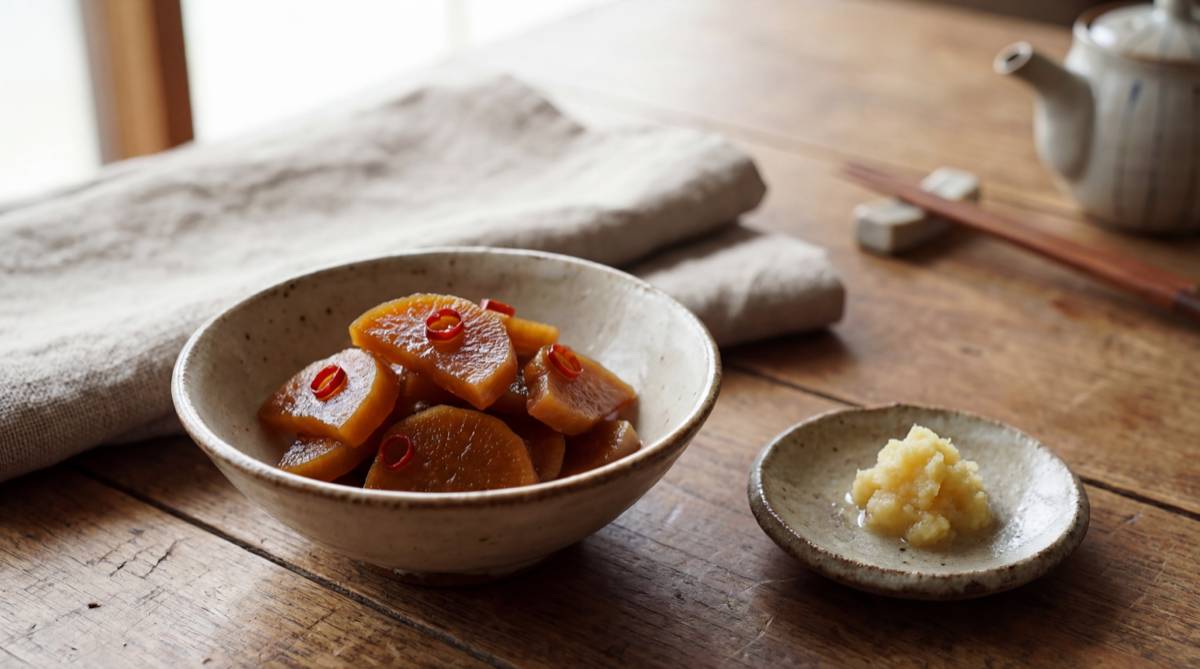
Grandma always said, "Pickles are meant to be eaten to the last piece." When they sour, cook with them. The waste-nothing wisdom of her kitchen.
Frequently Asked Questions
Q. How long does homemade takuan keep?
It depends on salt content and storage conditions. Roughly: 3-6 months at winter room temperature, 2-3 weeks refrigerated, 2-3 months frozen.
Q. If mold appears, should I throw everything away?
A thin white film (kahm yeast) is harmless -- remove it and the takuan underneath is fine. Widespread black or red mold means it's safer to discard.
Q. Does store-bought takuan follow the same storage rules?
Not exactly. Most store-bought takuan keeps 1-2 weeks refrigerated after opening. Follow the package instructions, as the salt content and preservatives differ from homemade.
Summary
The key to takuan storage is adapting to the seasons:
- Winter: leave in the barrel at room temperature
- Spring onward: move to the refrigerator
- Excess portions: freeze
Even when it turns sour, cooking transforms it into something new -- letting you enjoy every last piece.
For the basic takuan-making process, see our complete guide.
More of grandma's preserved food recipes here.