 Grandma's Recipes
 6 Japanese Recipes Every Cooking Beginner Should Learn First
They're hard to mess up precisely because they're simple
Most people who say they "can't cook" simply started with the wrong recipe. Start with grandma's cooking instead. Few ingredients, simple steps. Dishes built on "roughly enough" leave no room for beginner mistakes.
This article introduces six dishes that will help any cooking beginner build a foundation in Japanese home cooking.
Start With Just These Three
If you're not sure where to begin, master these three:
1. A stir-fry (miso-glazed eggplant)
Three ingredients, five minutes. Learn the fundamental technique of stir-frying.
2. A simmered dish (nikujaga)
Put everything in the pot and wait. The Japanese staple of simmering comes naturally.
3. A rice dish (yakimeshi)
Applied stir-frying. Learn heat control with a dish that's forgiving even when imperfect.
With these three, you have the pillars of Japanese cooking: stir-frying, simmering, and rice dishes.
From there, just add new dishes at your own pace.
When people say "I'm bad at cooking," the problem is usually that their first attempt was too ambitious.
An elaborate pasta sauce. Fried chicken from scratch. Curry from whole spices.
Those recipes are fun for experienced cooks, but traps for beginners.
They should have started with grandma's cooking.
Three Reasons Grandma's Recipes Are Perfect for Beginners
Few ingredients
No specialty seasonings required.
Soy sauce, miso, sugar, sake, mirin.
These five cover almost everything.
No special equipment
One frying pan, one small pot.
Plenty for even the smallest kitchen.
"Roughly" is fine
Grandma's recipes never called for "180ml" or "2/3 teaspoon."
"About this much" and "when it looks right."
For single portions, eyeballing is actually more practical.
Why grandma never needed measuring spoons -->
Here are six dishes every beginner should learn.
1. Miso-Glazed Eggplant -- Your First "Stir-Fry"
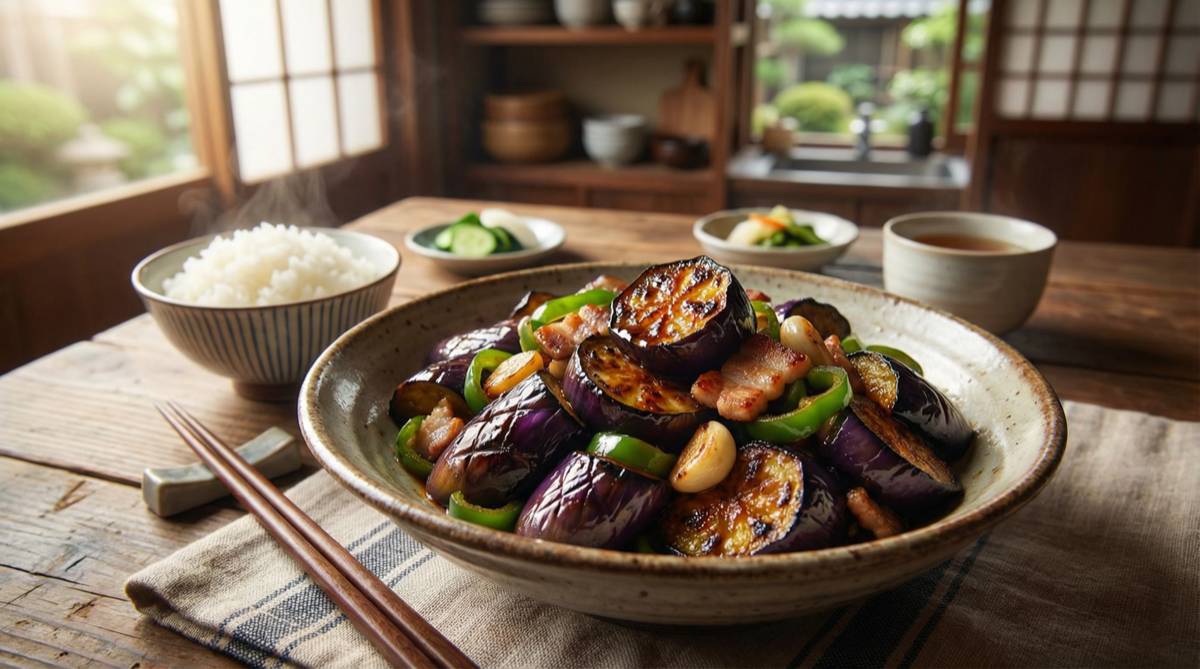
The first cooking technique to learn is stir-frying.
It's the fastest way to complete a meal.
Slice eggplant, stir-fry in oil, coat with miso sauce. Done.
The miso sauce: equal parts miso, sugar, and sake, mixed together.
Once you master this, the possibilities expand endlessly.
Swap eggplant for bell pepper or tofu -- it still works.
Learning the "stir-fry + miso sauce" combination opens up a world of cooking.
The one thing to remember:
Add the miso sauce after turning off the heat. This prevents burning and makes it beginner-proof.
Detailed miso eggplant recipe -->
2. Yakimeshi (Japanese Fried Rice) -- Building on Stir-Frying
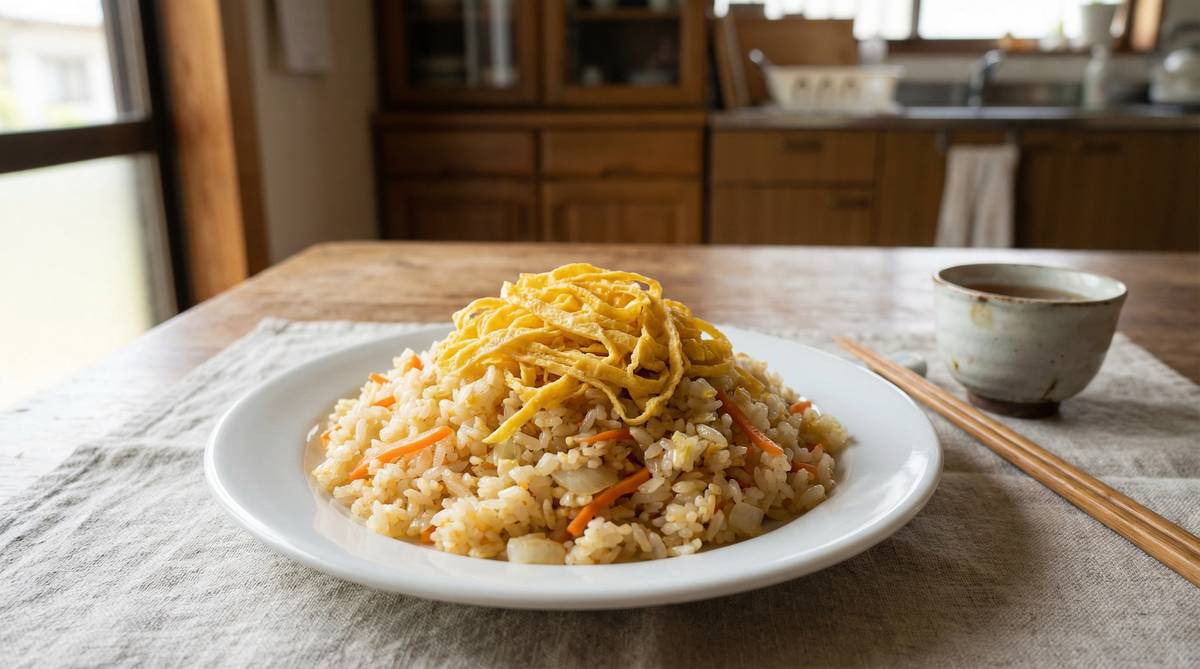
Once you're comfortable with miso eggplant, try yakimeshi.
Frying rice is slightly trickier than frying vegetables.
Getting it fluffy instead of sticky requires some heat control.
But even if it doesn't turn out perfectly, it's still edible.
Slightly sticky fried rice still tastes good.
A dish where failure is forgivable -- perfect for learning heat control.
The one thing to remember:
Use cold rice (refrigerated or frozen) for fluffier results.
Day-old leftover rice actually works better than freshly cooked.
Detailed yakimeshi recipe -->
3. Nikujaga (Meat and Potato Stew) -- Learning to "Simmer"
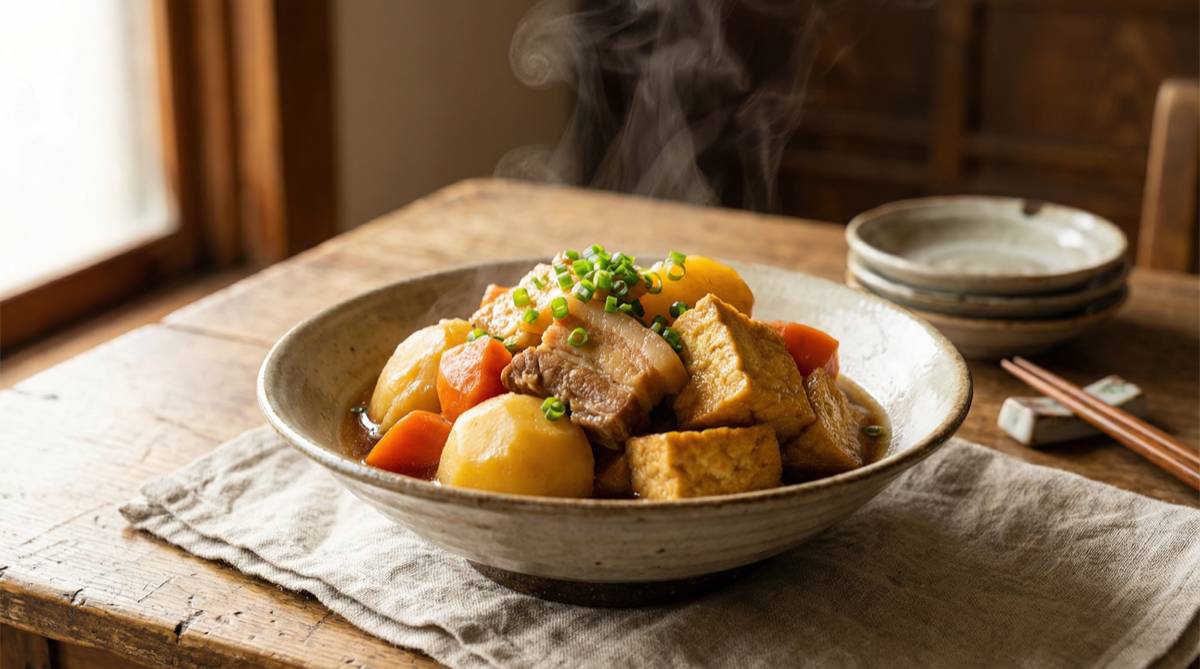
"Simmering" is actually easier than stir-frying.
Put ingredients in a pot, set to low heat, and wait.
Nikujaga is the most approachable of all Japanese simmered dishes.
Soy sauce, mirin, and sugar in a sweet-savory broth -- that's the whole recipe.
One batch makes 2-3 meals, a huge bonus for beginners.
"Nimono tastes best the day after" -- you'll experience this firsthand.
The one thing to remember:
Cut potatoes large to prevent them from falling apart.
Then low heat for 10-15 minutes with the lid on. Just wait.
Detailed nikujaga recipe -->
Easy recipes for solo living -->
4. Kencho (Daikon and Tofu Stew) -- A Meat-Free Simmered Dish
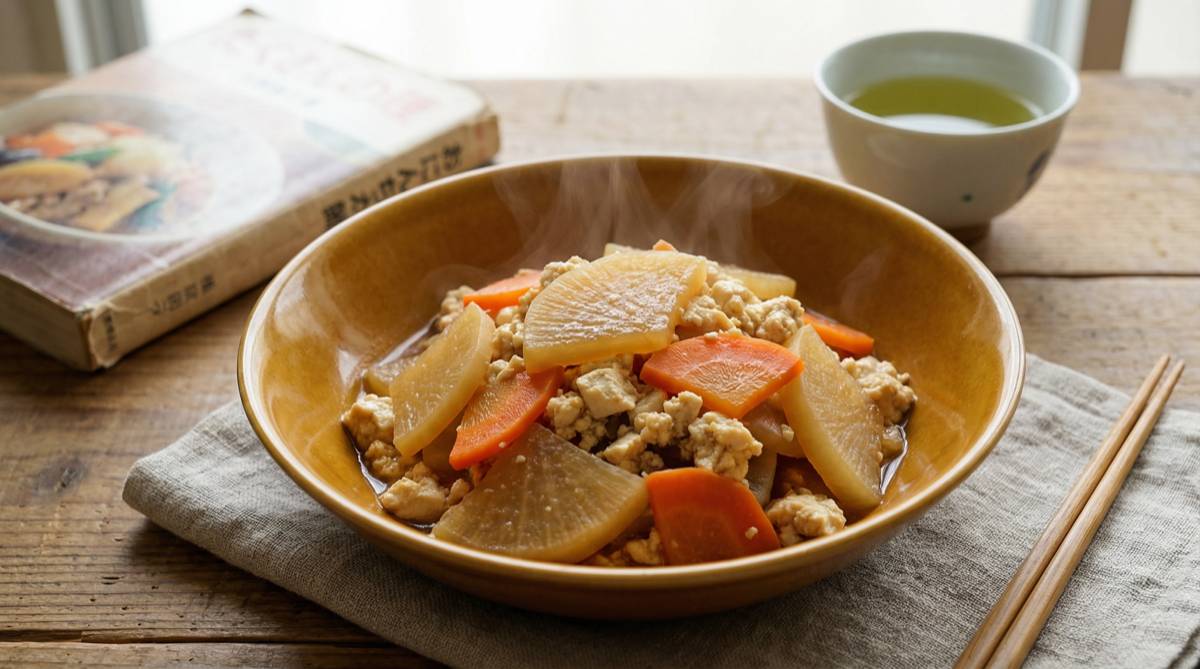
Try a simmered dish without meat too.
Yamaguchi grandma's kencho is complete with just daikon and tofu.
"Crumbling the tofu by hand as you add it" -- this small step elevates the dish.
No dashi needed: tofu and daikon naturally release their own umami.
A dish that teaches you "vegetables alone can make a proper meal."
The one thing to remember:
Firm tofu (momen) holds up better and is easier to work with.
Slice daikon thin for faster cooking and shorter wait times.
5. Ginger Tsukudani (Preserved Ginger) -- Your First Preserved Food
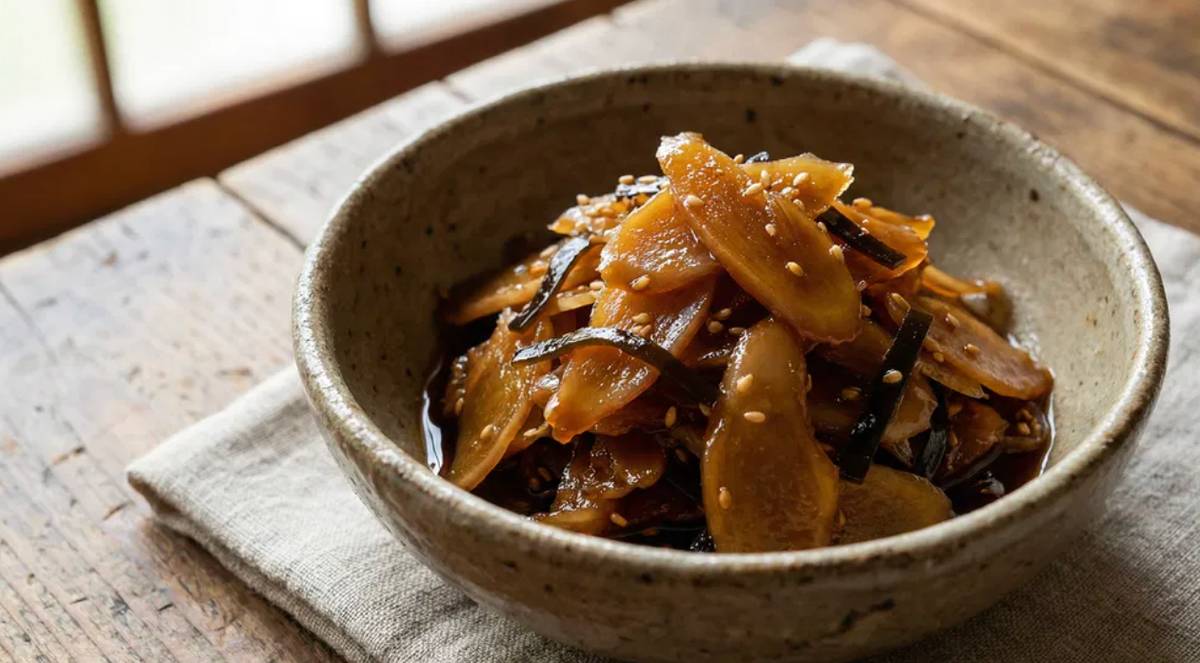
Have you ever made tsukudani (preserved simmered condiment) from scratch?
Many people assume it's something you buy, but it's surprisingly simple to make.
The ingredients: ginger, soy sauce, and sugar. That's all.
As it simmers down, the aroma builds, the color deepens, and the texture becomes glossy.
Watching this transformation teaches you the "why" behind cooking.
It keeps for two weeks refrigerated, making it a perfect weekday pantry staple.
An ideal first step into the world of meal prep and preserved foods.
The one thing to remember:
Just simmer until the liquid evaporates.
If it starts to scorch, lower the heat -- that's literally the only way to fail.
6. Isobe-Yaki Rice Cake -- The Simplest Possible Dish (3 Ingredients)
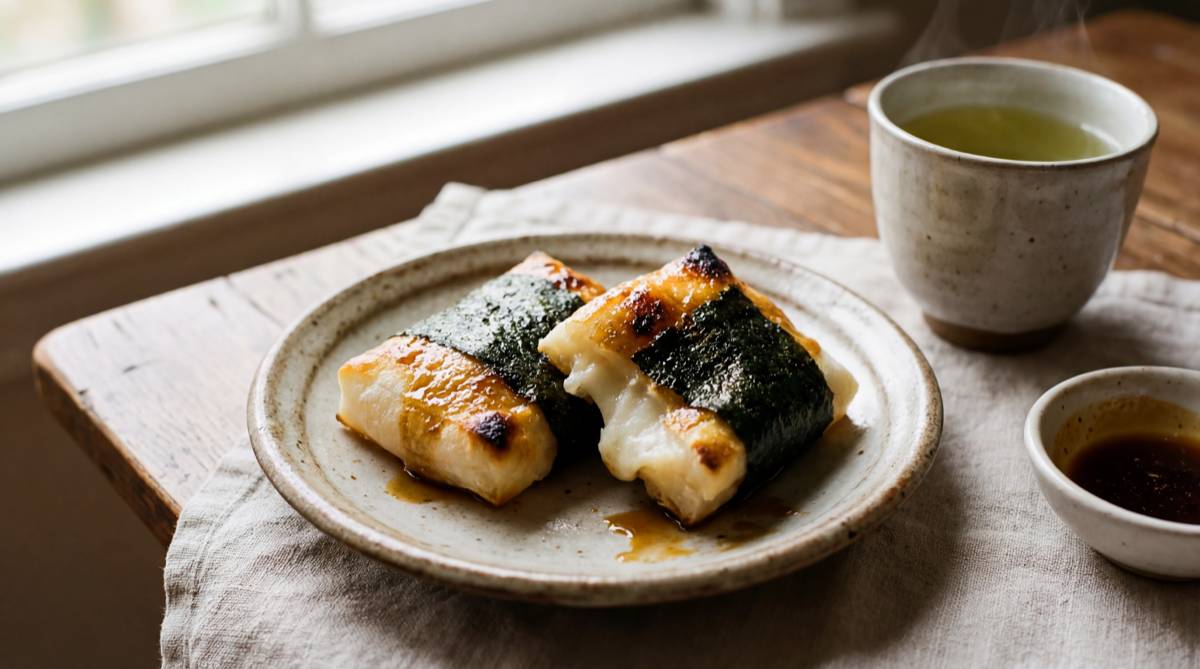
We end with a three-ingredient dish.
Rice cake, nori seaweed, soy sauce. Nothing else.
Grill, dip, wrap. Under five minutes.
But the satisfaction of eating it fresh from the pan is real.
"More complex means more delicious" is a myth.
The simplest dishes let ingredients shine.
Grandma knew this, which is why she kept things simple.
The one thing to remember:
Dry-fry without oil for a crispy surface.
Low heat, slow and steady -- that's the only trick.
Beginner Cooking FAQ
Q. What should a cooking beginner make first?
Start with a simple dish that teaches one basic technique -- stir-frying or simmering. Miso-glazed eggplant or nikujaga are ideal first recipes because they use few ingredients and are very forgiving.
Q. What are the minimum seasonings needed for Japanese cooking?
Soy sauce, miso, sugar, sake, and mirin. These five cover the vast majority of Japanese home cooking. They're affordable and keep well.
Q. How can someone who's bad at cooking avoid mistakes?
Don't obsess over exact measurements. Start with simple recipes where "roughly right" still tastes good. Grandma's recipes are based on intuition, so small variations still produce delicious results.
Just Make One Dish
We introduced six dishes, but you don't need to learn them all.
Just make one.
Eat it.
If you think "that was good," make it again.
That repetition is the path to becoming a good cook, and grandma started the same way.
Mistakes are fine.
"Roughly" is fine.
Perfection is not required.
All that matters is turning on the stove.
What country grandmothers ate every day -->