 Grandma's Recipes
 Japanese Simmered Dishes (Nimono) | Grandma's Golden Ratio for Perfect Flavor
Daikon, taro, lotus root -- master the seasoning ratio and you master nimono
Think simmered dishes are difficult? Once you learn the golden ratio of seasonings, anyone can recreate grandma's flavors. Here we share recipes for classic Japanese nimono along with time-tested tips that have been refined over generations.
Why Simmered Dishes Seem Difficult
Many people say they struggle with nimono (simmered dishes).
The heat is hard to control, the flavor is too weak, or it comes out too salty.
But perhaps the only thing missing is knowing the "golden ratio."
Grandmothers could make perfect nimono without measuring cups.
That is because decades of experience had etched the golden ratio into their very being.
Here we share that golden ratio along with detailed instructions for classic simmered dishes.
The Golden Ratio for Nimono Seasoning
The five essential seasonings for home-style nimono are: soy sauce, mirin, sugar, sake, and dashi.
The golden ratio for vegetable-based simmered dishes is:
Dashi : Soy Sauce : Mirin : Sugar = 10 : 1 : 1 : 0.5
From this baseline, add a touch more sugar if you prefer sweeter, or a splash more soy sauce for a more savory result.
That simple adjustment is all it takes to create your family's signature flavor.
Homemade dashi from kombu and bonito flakes is ideal, but store-bought dashi packets work perfectly well.
Tips for Simmered Daikon
The secret to great daikon nimono is pre-boiling.
Pre-boiling in rice-rinsing water removes bitterness and helps the daikon cook tender.
Grandma always said, "Daikon needs to be cooked twice."
Beveling the edges prevents crumbling and improves flavor absorption.
Bring to a boil over medium heat with dashi and seasonings, then reduce to low heat with a drop lid.
The real magic happens when you turn off the heat and let it cool -- that resting time is grandma's secret to deeply flavored nimono.
Tips for Simmered Taro
Proper preparation is essential for taro.
After peeling, rub with salt and rinse to remove excess slime, which helps flavors penetrate.
But don't remove too much -- some slime is needed to preserve taro's distinctive character.
Try this simmered dish using dried taro stems (imogara), taught to us by a Miyagi grandmother.
A perfect example of traditional preserved food wisdom.
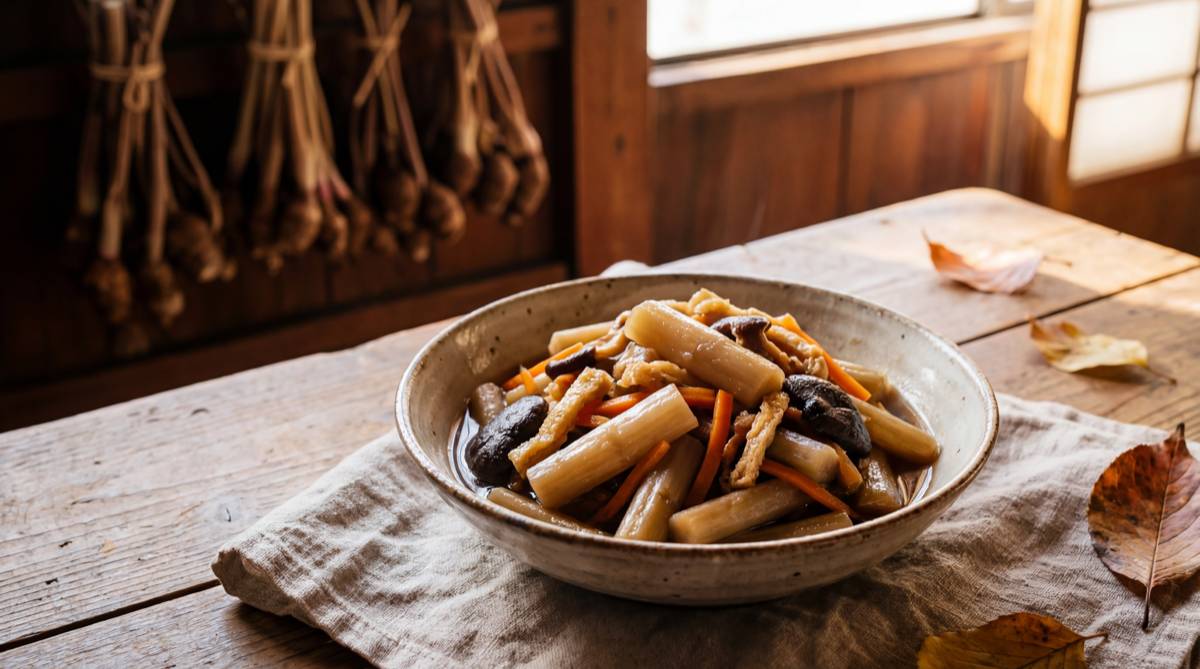
Imogara has a delicate, soft texture that absorbs the savory simmering broth beautifully.
A different kind of rustic deliciousness from taro itself.
Spring Mountain Vegetable Nimono
Simmered mountain vegetables are a springtime-only pleasure.
Zenmai fern, butterbur, and bracken are pre-boiled to remove bitterness, then simmered in kombu dashi with soy sauce, mirin, and sugar.
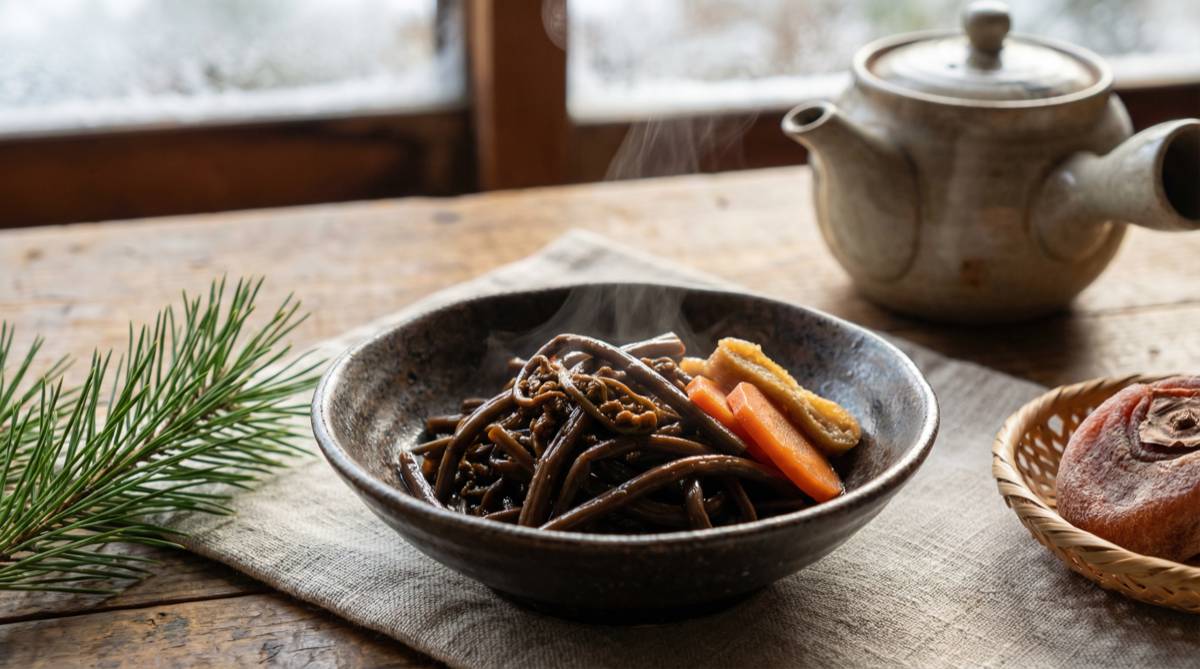
Niigata grandma's simmered zenmai, paired with fried tofu to amplify the umami.
The mountain fragrance and gentle spring bitterness bring the season right to your table.
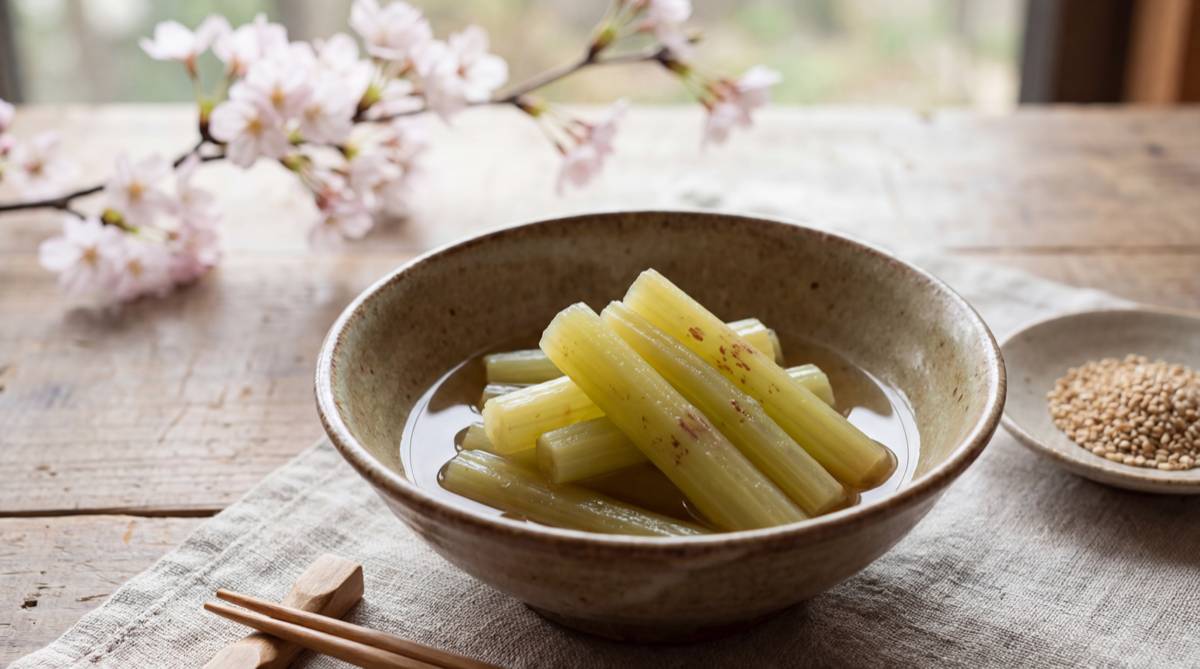
Simmered butterbur (fuki) announces the arrival of spring with its distinctive aroma and satisfying crunch.
Thorough pre-boiling to remove bitterness is the key to a delicious result.
Kombu Stew -- Wisdom from Hokuriku
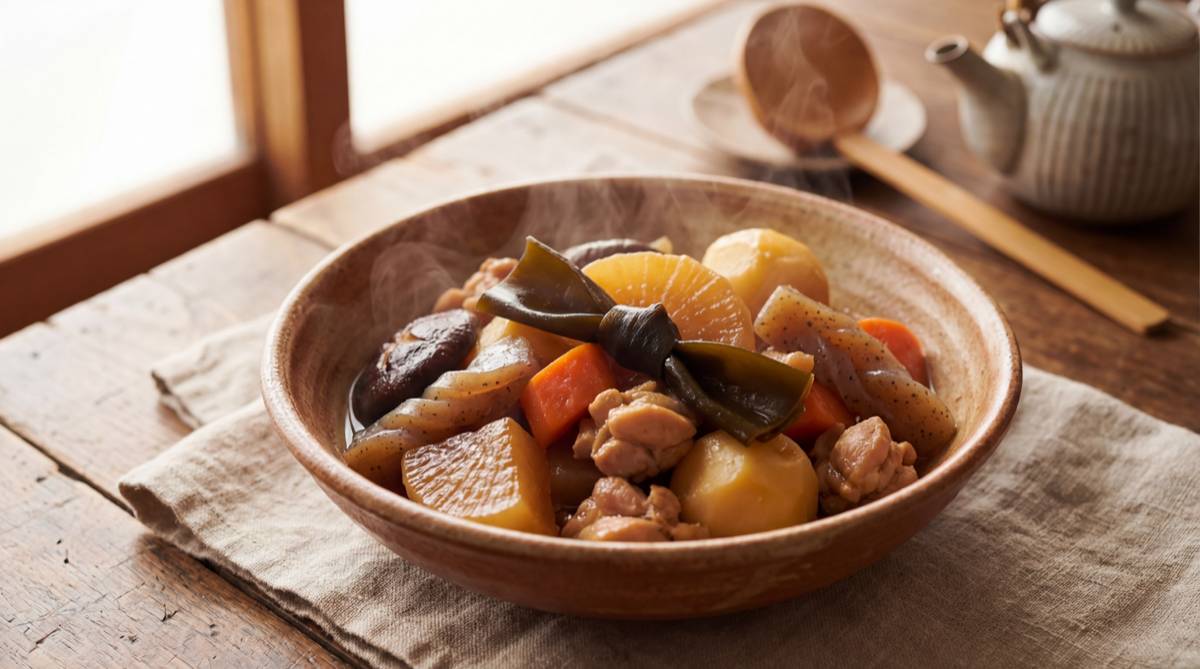
Toyama grandma's "gottani" is a hearty stew loaded with kelp (kombu).
This culinary tradition traces back to historical trade routes that brought kombu from Hokkaido.
The natural thickness and deep umami of the kombu is so powerful that no separate dashi is needed.
Becoming a Nimono Master
The reason grandma's nimono tasted so good was not a recipe -- it was repetition.
Hundreds of times making the same dish, until her hands knew exactly how much soy sauce to add.
Until her eyes recognized the perfect color of the broth. Until her nose detected the precise moment of "just a little more."
Start with the golden ratio. As you gain confidence, begin adjusting by feel.
That is how "our family's flavor" is born.
The science behind grandma's intuitive measurements -->
Gentle, nourishing recipes from grandma's kitchen -->