 Grandma's Recipes
 5 Nourishing Japanese Recipes for When You're Under the Weather
"Just eat something and you'll feel better" -- grandma's favorite saying
Feeling sluggish. Stomach heavy. No appetite. When someone in the family felt this way, grandma always headed to the kitchen. Not for supplements or energy drinks, but for simple, warming food made in a single pot.
Feeling sluggish.
Stomach heavy. No appetite.
At times like these, you might reach for a convenience store jelly drink or an energy shot.
Nothing wrong with that. But what your body really craves might be something a little warmer.
When someone in the family was feeling off, grandma always headed to the kitchen.
"Just eat something and you'll feel better" was her favorite saying.
Why Grandma's Cooking Is Gentle on the Body
Grandma's cooking carries a different kind of gentleness than modern "health food."
The natural flavor of ingredients shines through
Seasoning is minimal.
Soy sauce, dashi, and the ingredient itself.
Nothing extra is added, so there is little burden on the body.
Warm and easy to digest
Simmered dishes, soups, porridge.
Grandma's cooking is built on the verb "to simmer."
Cooked vegetables are easy to digest, and warm broth loosens the body from its core.
Seasonal ingredients, naturally
Grandma cooked with "what was available."
That naturally meant seasonal ingredients.
Seasonal produce tends to be more nutrient-rich and often aligns with what the body needs at that time of year.
Here are five dishes that offer comfort when your body needs it most.
1. Tea Porridge (Chagayu) -- When Your Stomach Is Exhausted
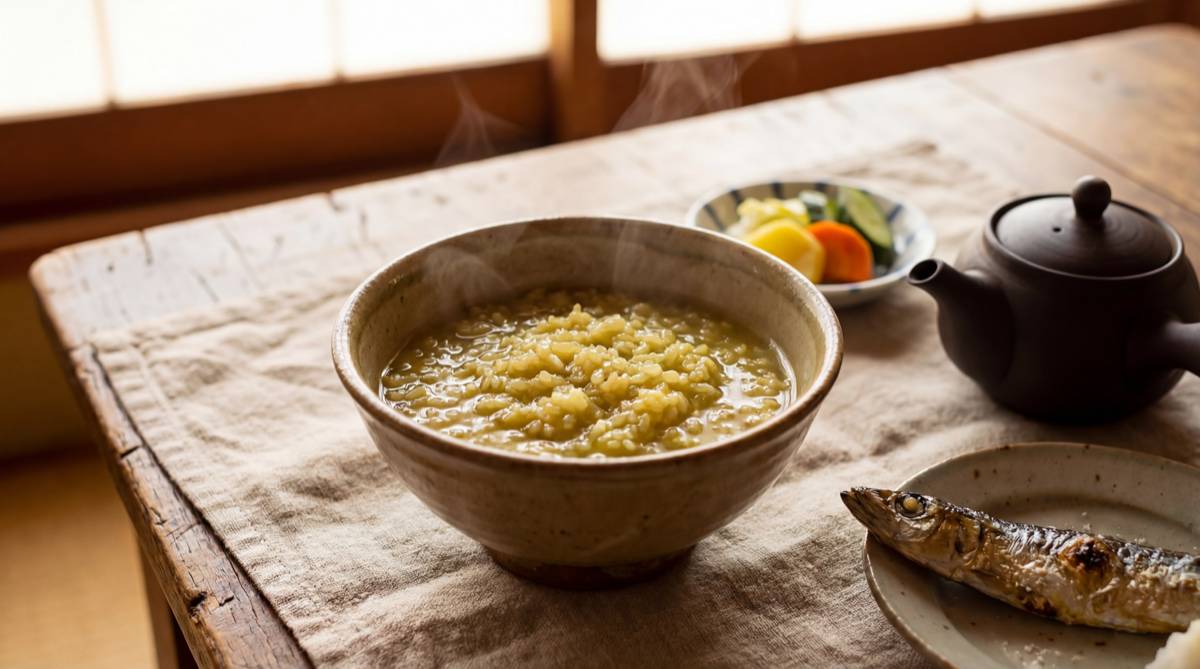
Just rice cooked in roasted barley tea.
That alone creates a bowl that slides gently into a weary stomach.
Wakayama grandmothers ate this nearly every morning.
They called it "okaisan" -- not a special remedy, just everyday sustenance.
After a night of drinking, at the first sign of a cold, on evenings with no appetite.
No matter the situation, this you can always eat.
Just one pinch of salt brings out the tea's full aroma.
When your stomach says "I can't handle anything" -- try this first.
2. Kencho (Daikon and Tofu Stew) -- When You Need Warming Up
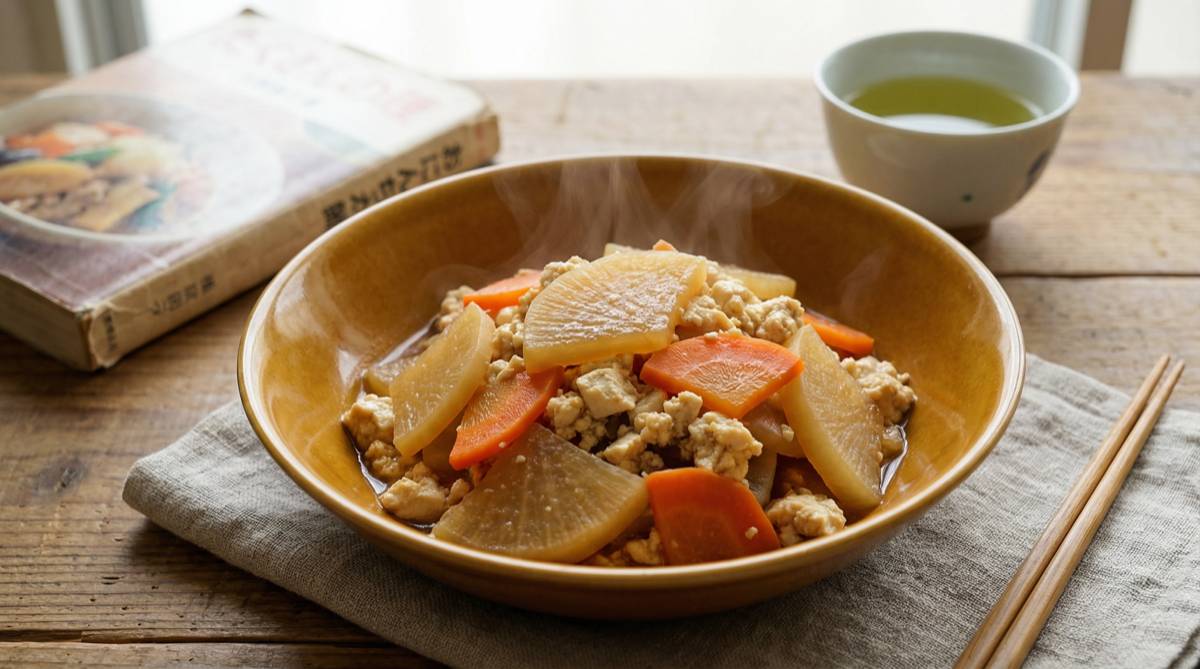
A Yamaguchi grandmother's everyday dish: a simple stew of daikon radish and tofu.
Daikon contains enzymes that aid digestion, and tofu provides gentle protein.
Both are easy on the stomach.
The grandma technique: crumble the tofu by hand as you add it.
The broken tofu absorbs the broth, developing a gentle, soul-soothing depth.
When your body feels cold, this warms you gradually from the inside.
By the time you finish eating, you feel just a little bit better.
3. Kombu Gottani Stew -- When You Need Slow, Deep Nourishment
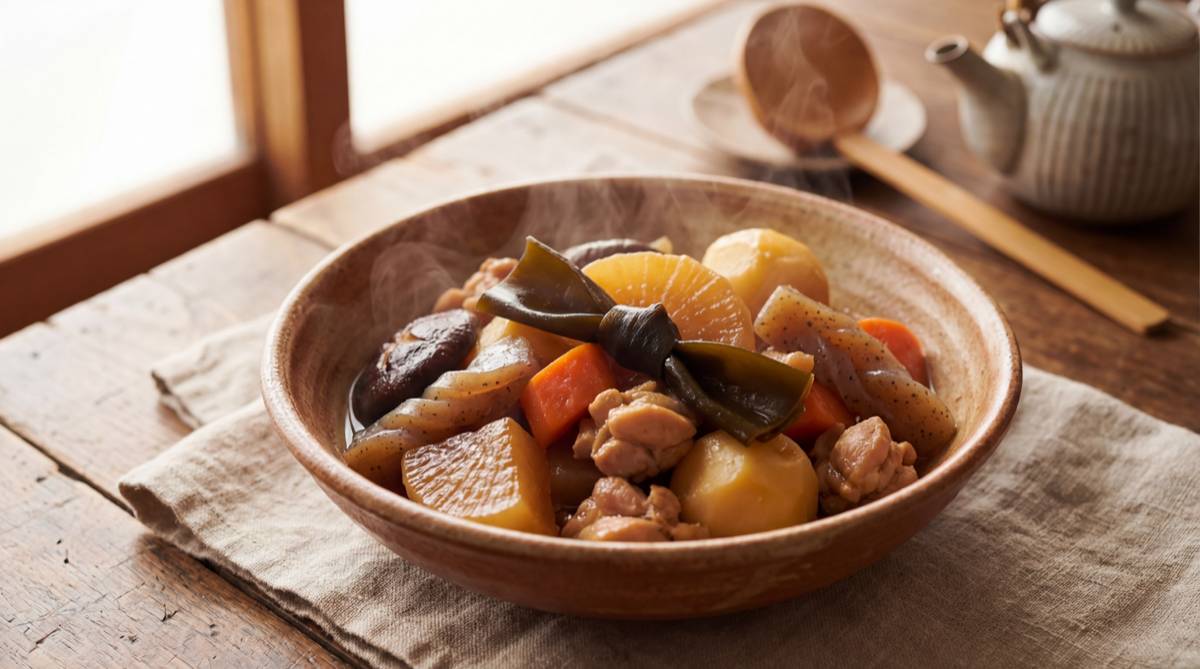
A Toyama grandmother's creation: a stew rich with kombu and root vegetables.
The umami of the kombu permeates everything, so no separate dashi is needed.
The nutrients from chicken and root vegetables dissolve into the broth -- eat it all, slowly.
"Gottani" means "everything stew," and true to its name, you can add whatever is in the fridge.
Grandma's waste-nothing spirit meant throwing in every leftover vegetable.
That generosity resulted in remarkably balanced, nourishing meals.
When your stamina is low, eat this one spoonful at a time.
4. Simmered Butterbur (Fuki) -- When You Want to Reset Your Body
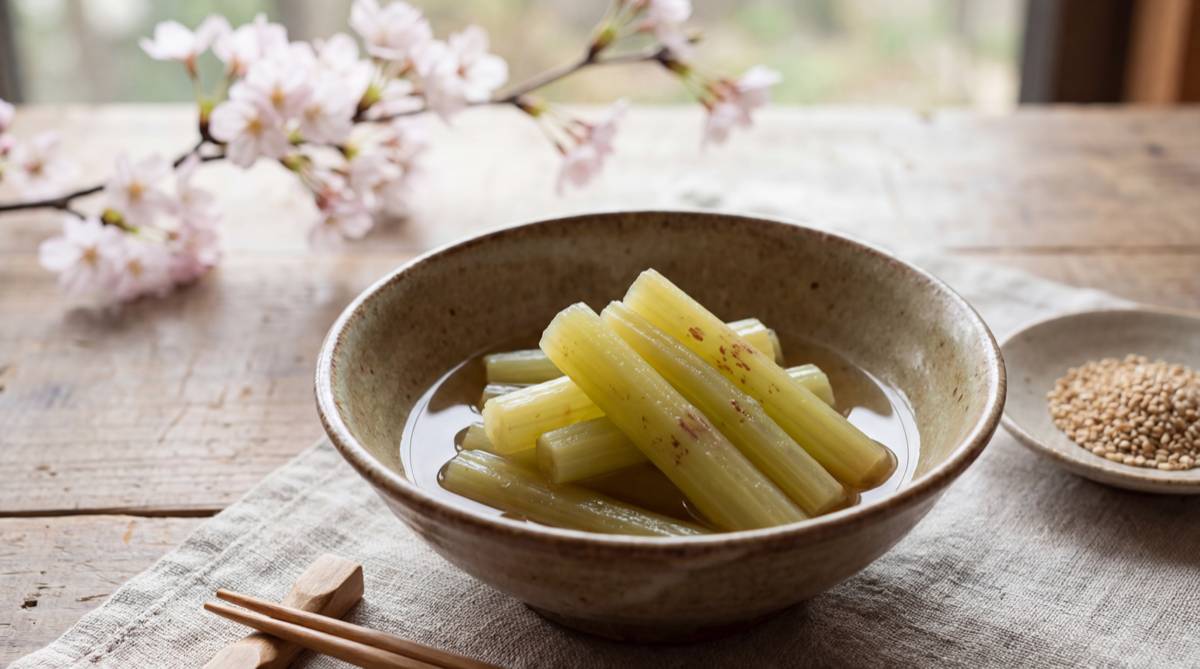
Butterbur that appears in spring, lightly simmered in a delicate broth.
A Saga grandmother's annual spring ritual.
The subtle bitterness of fuki carries a cleansing quality, as if washing away the heaviness accumulated during winter.
The old saying that "spring mountain vegetables flush out the body's toxins" may not be entirely folklore.
No flash or drama, but eating it leaves you feeling refreshed.
Grandma called this kind of cooking "like medicine."
5. Simmered Dried Taro Stems (Imogara) -- When You're Vaguely Out of Sorts
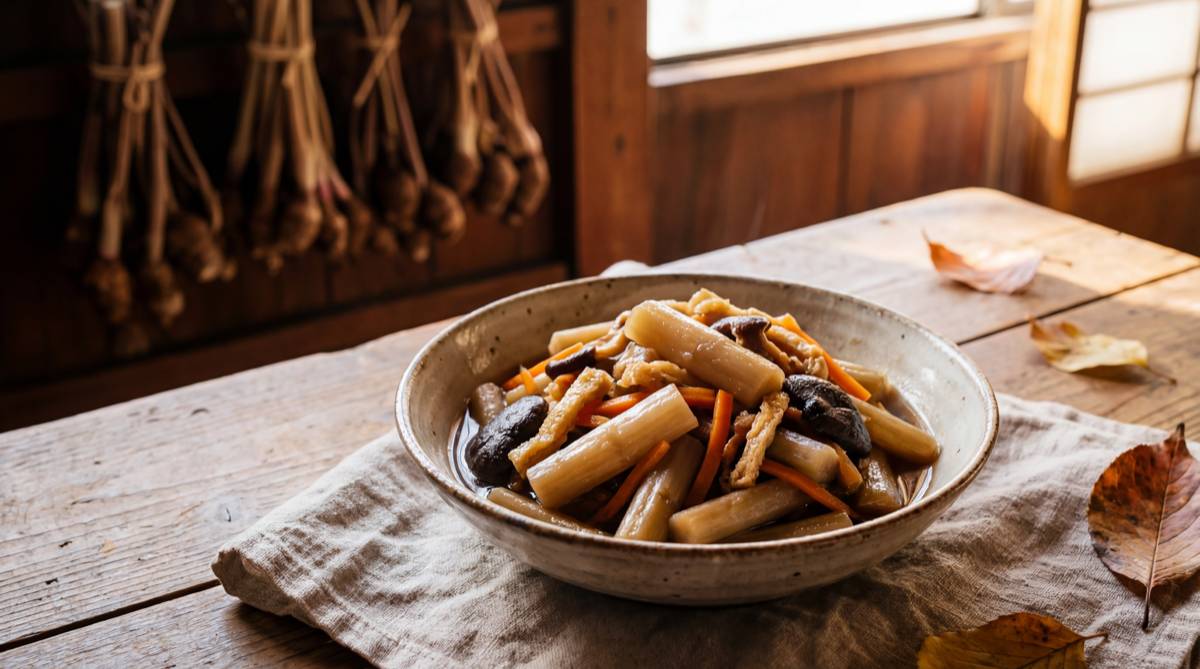
Dried taro stems simmered with fried tofu (aburaage).
A Miyagi grandmother's go-to pantry staple.
Rich in dietary fiber, imogara helps settle the digestive system.
Humble in appearance, but each bite releases a quiet, satisfying umami from the broth-soaked dried stems.
For those vague, undefined feelings of being "not quite right" -- this kind of simple, unassuming food is exactly what helps.
What the body needs may be simpler than we think.
The Power of Eating
Grandma probably never knew the names of specific nutrients.
Vitamins, fiber, minerals -- she never talked about any of that.
But she knew that ginger helps with colds, that porridge soothes a tired stomach, that spring calls for mountain vegetables. She knew instinctively how to match food to the body's needs.
Supplements and protein shakes are convenient, but a pot of simmered vegetables carries something that numbers cannot measure.
When your body feels heavy:
Go to the kitchen. Fill a pot with water. Turn on the stove.
That alone is enough to shift your mood, even just a little.