 Grandma's Recipes
 10 Dishes Japanese Country Grandmothers Ate Every Day
Recipes you won't find in supermarkets -- the flavors that were meant to be passed down
In country grandma's kitchen, there were no recipe books or measuring spoons. She cooked with local ingredients and seasonal produce, putting them in the pot as naturally as breathing. We've gathered 10 such dishes -- humble, everyday foods from rural Japan.
"Country cooking" carries a certain nostalgia.
Not refined, but comforting. Plain to look at, but deeply satisfying with every bite.
Food made not to impress, but to nourish the daily table.
Yet these dishes are quietly disappearing.
When grandma passes away, the people who knew her flavors are gone too.
"Our family's dish" slips away, one recipe at a time.
Here are 10 of those dishes, gathered in one place.
Three Traits of Country Cooking
Only local ingredients
Before modern transportation, rural kitchens ran on what the land provided.
Mountains meant wild vegetables, coasts meant seafood, farmland meant crops and grains.
People ate what their land gave them -- not ingredients shipped from elsewhere.
"Leftovers" became meals
In country cooking, nothing went to waste.
Vegetable stems, peels, aging pickles -- everything found its way into the pot.
"Mottainai" (too precious to waste) was the engine of cooking.
Preservation was a survival skill
Before refrigeration, keeping food from spoiling was a matter of life and death.
Tsukudani (preserved simmered food), pickles, dried goods, miso-preserved items.
The preservation wisdom of rural Japan is also the history of deliciousness itself.
Here are 10 dishes from grandmothers' kitchens across Japan.
1. Simmered Zenmai Fern (Niigata) -- Cooking What the Mountain Provides
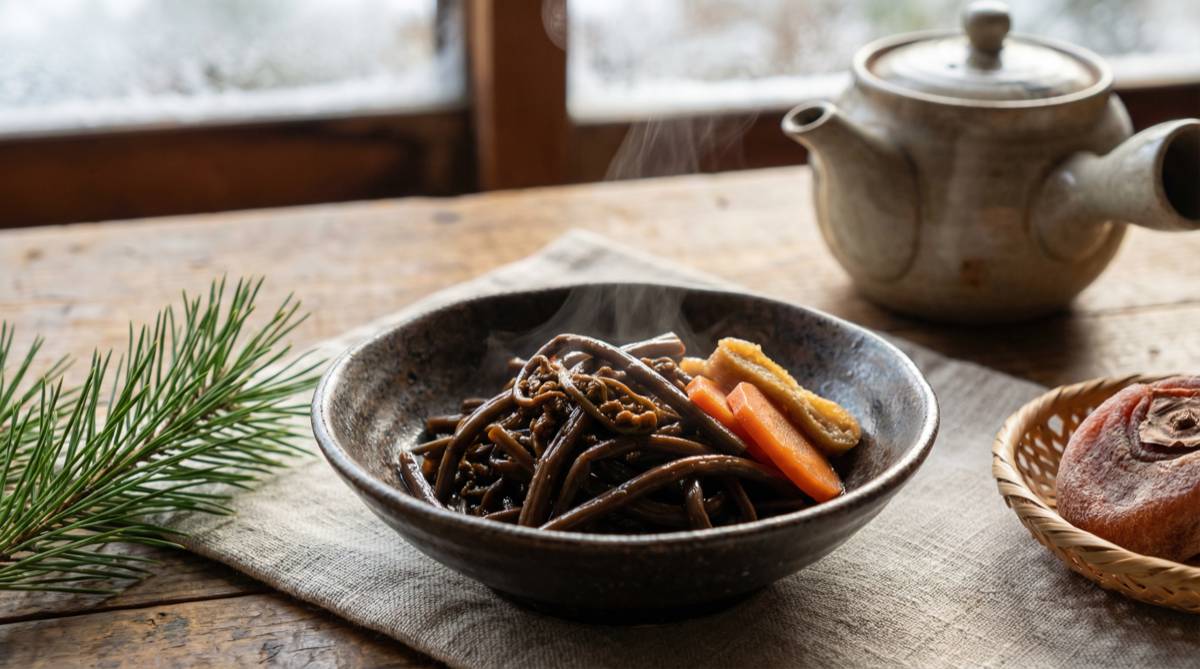
When spring arrived, Niigata grandma headed into the mountains.
She picked zenmai fern, removed the bitterness, and simmered it slowly.
The slight earthiness of wild mountain vegetables is tamed by soy sauce and sugar.
It takes time and effort, but she never skimped on either.
"Mountain plants are strong in flavor, but that's what makes them good for you," she might have said.
2. Simmered Takuan Pickles (Ishikawa) -- Even Old Pickles Become a Proper Dish
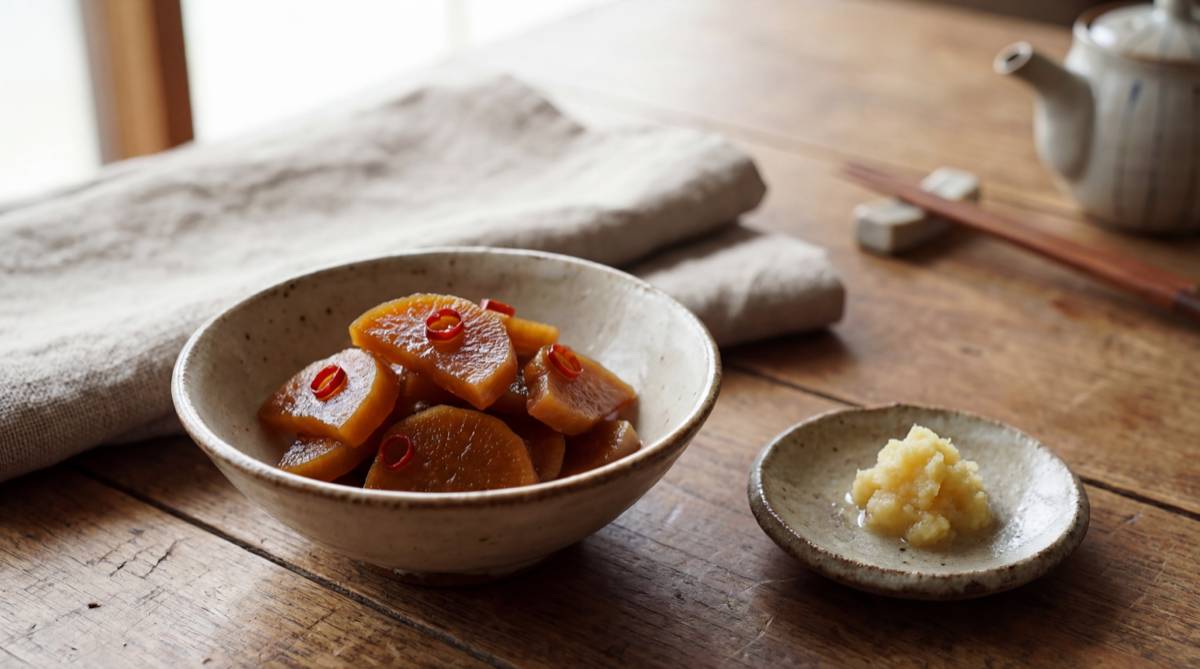
Takuan pickles that have fermented too long and turned sour? Simmer them.
An Ishikawa grandmother's waste-nothing philosophy in action.
The sourness fades in the pot, replaced by a deep, complex umami.
A kitchen "mistake" transforms into a new dish -- rural cooking's greatest magic trick.
3. Torikuri -- Chicken and Chestnut Stew (Hokkaido) -- Autumn's Bounty in One Pot
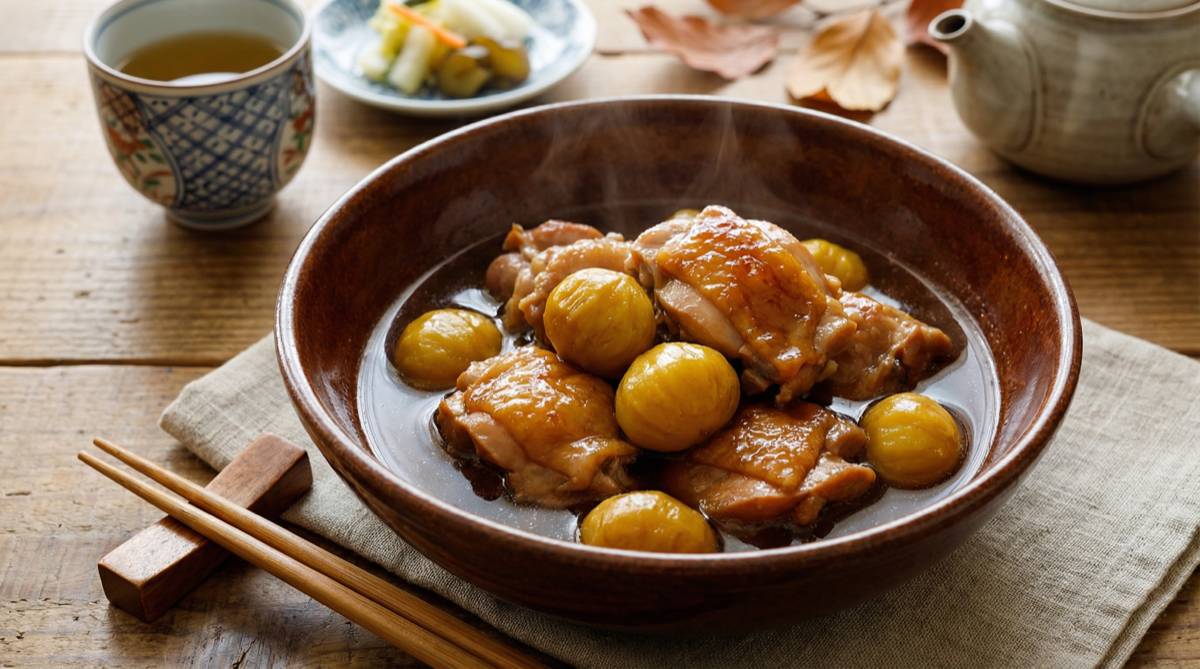
A Hokkaido grandmother's autumn specialty: chicken simmered with chestnuts.
The name "tori-kuri" simply states its contents -- chicken and chestnuts.
The sweetness of chestnuts intertwined with savory chicken makes rice disappear.
Hokkaido's brief autumn, captured in a single pot.
4. Yakimeshi -- "Whatever's Around" Fried Rice (Wakayama)
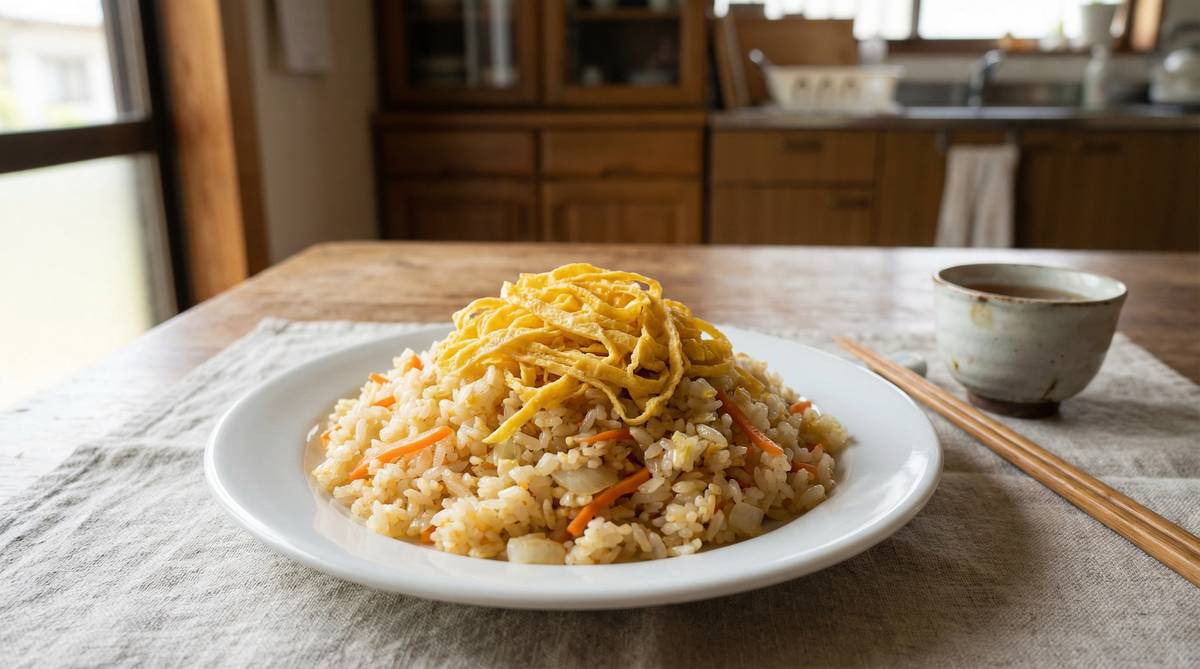
No fancy ingredients at all.
A simple fried rice made with egg ribbons and leftover rice from Wakayama.
Though "fried rice" conjures images of Chinese cooking, this yakimeshi is thoroughly Japanese.
Seasoned with soy sauce only.
Its simplicity lets the sweetness of the rice shine through.
5. Gameni -- Braised Chicken and Root Vegetables (Fukuoka)
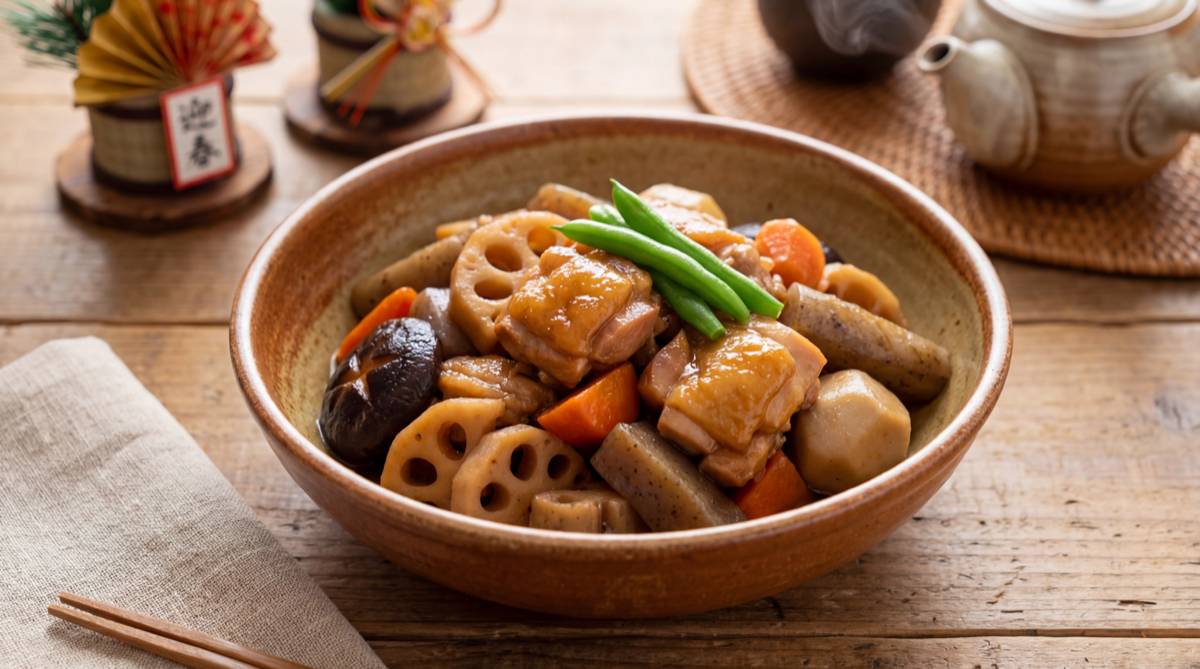
Known nationwide as "chikuzen-ni," in Fukuoka this dish is called "gameni."
Chicken and root vegetables simmered in a sweet-savory broth.
Burdock, lotus root, carrot, konnyaku.
Every vegetable from the fields goes in -- an abundant, generous dish.
Not just for New Year: Fukuoka grandmothers made this regularly.
6. Yuzu and Kintoki Bean Kakimaze (Tokushima) -- Festival Day Flavors
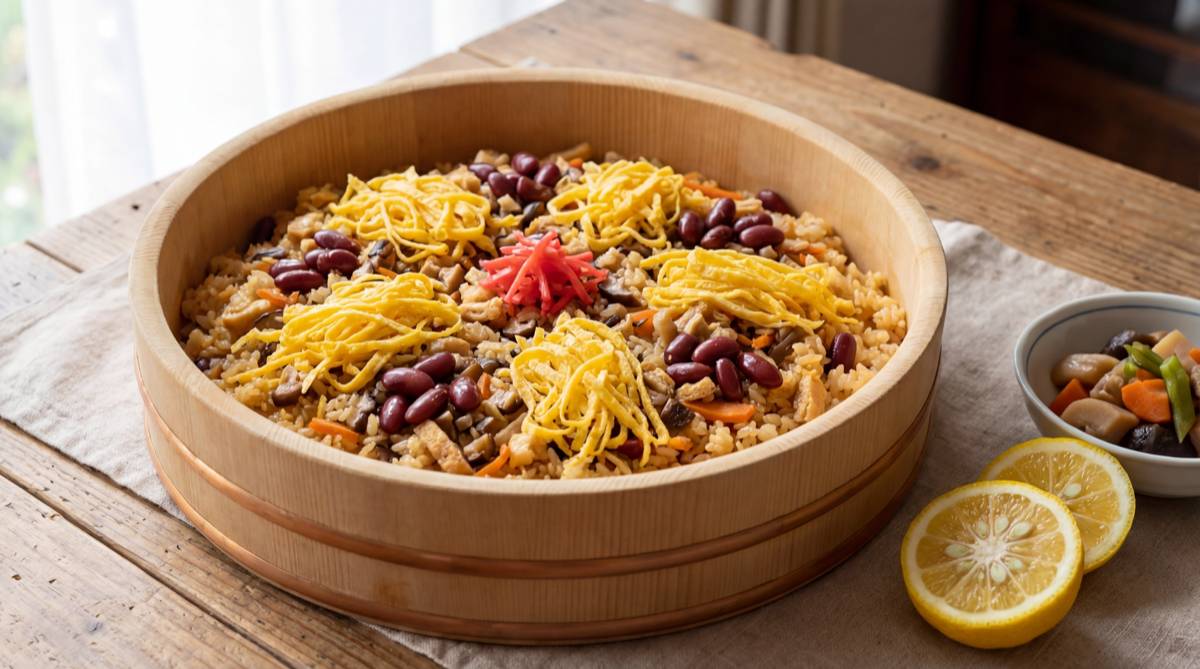
A Tokushima grandmother's creation for festivals and celebrations -- a type of mixed sushi rice.
Yuzu citrus fragrance and the gentle sweetness of kintoki beans bring festive elegance to a humble dish.
Flavor permeates every grain, and it tastes wonderful even at room temperature.
"Special occasion food" didn't come from far away -- it was born right in the kitchen.
7. Fresh Ginger Tsukudani (Nagano) -- Early Summer Preserves
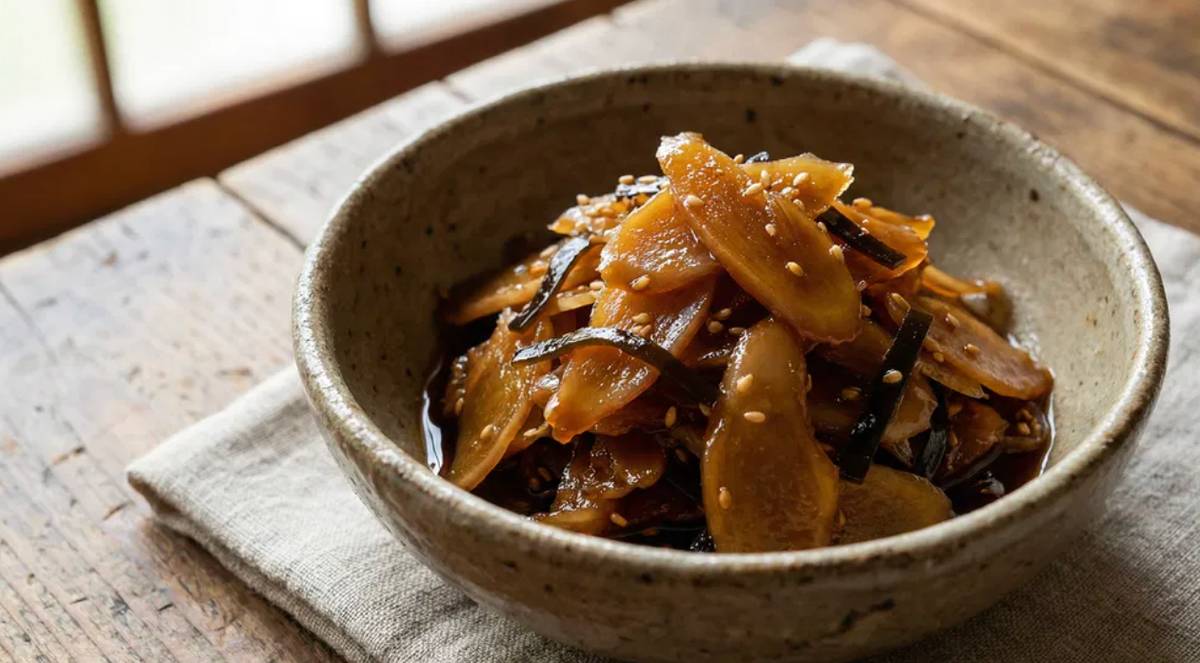
As the rainy season ended, Nagano grandma prepared large batches of fresh ginger.
Slowly simmered in soy sauce and sugar, then stored in jars.
Spooned over rice, the ginger's warmth and sweetness spread gently.
This pantry staple appeared on the table throughout the summer months.
8. Ikanago no Kugini -- Simmered Sand Lance (Hyogo) -- A Spring Kitchen Ritual
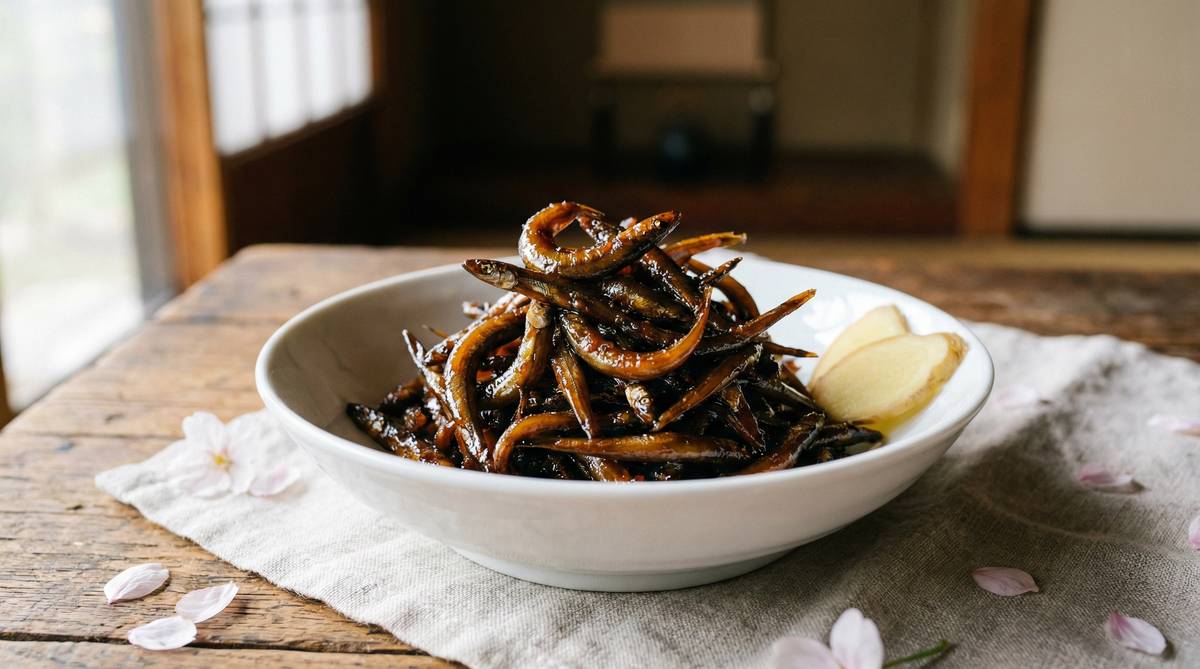
Tiny sand lance fish from the Harima Sea, simmered until dark and glossy.
In Hyogo, when spring arrives, grandmothers begin making kugini in earnest.
Named for their resemblance to bent nails (kugi), these preserved fish serve as a year-round rice companion.
9. Wild Garlic with Vinegar Miso (Kanto) -- Foraging from the Nearest Field
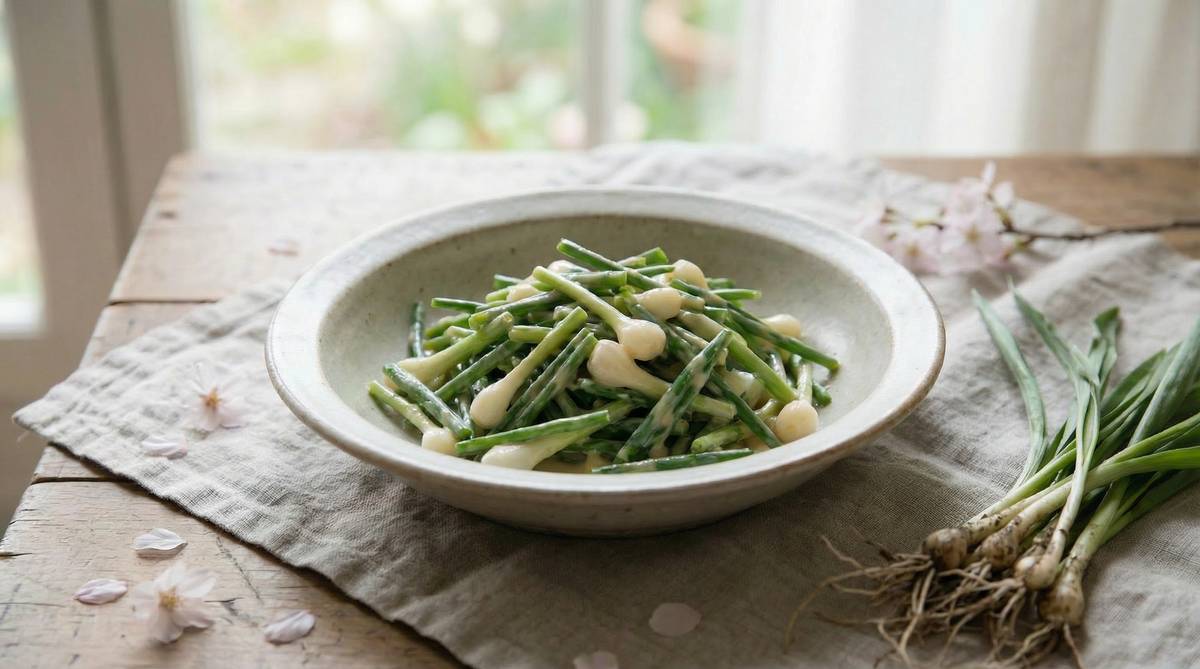
Nobiru (wild garlic) grows along roadsides and riverbanks each spring.
Dig them up root and all, dress with vinegar miso. That's the whole recipe.
Not a commercial product -- not even something with a price tag.
But the joy of eating something you picked yourself is different from anything bought at a store.
A dish from a time when walking outside meant finding ingredients.
10. Simmered Dried Taro Stems (Miyagi) -- Nothing Is Wasted
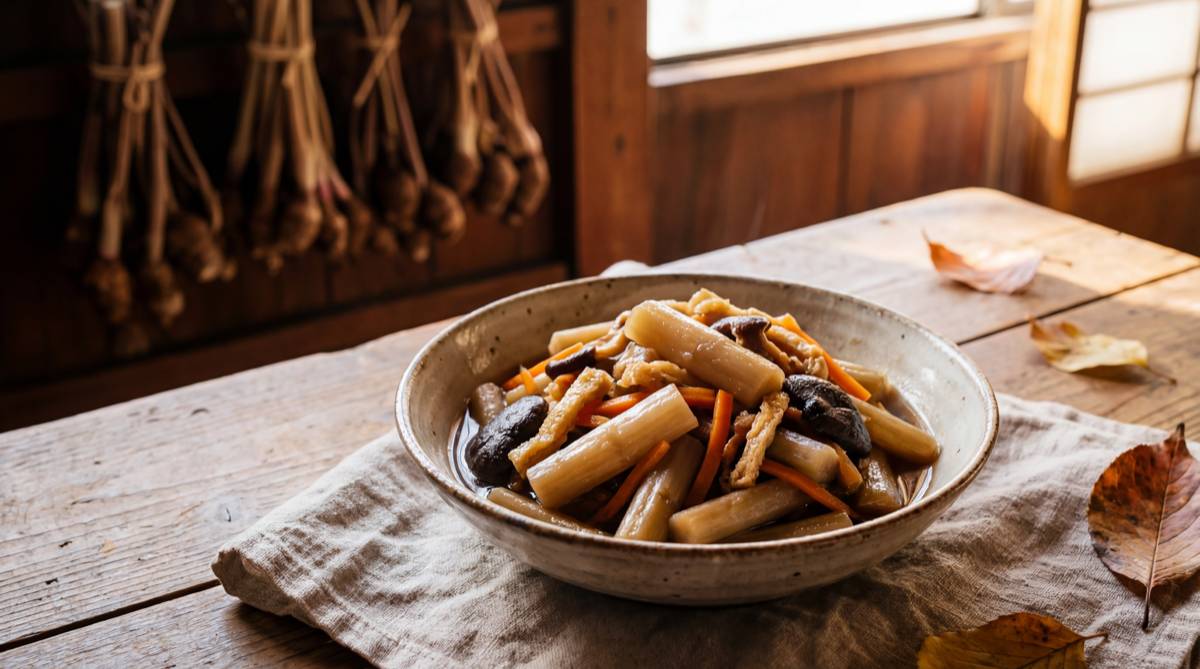
Dried taro stems -- "imogara" -- are an ingredient rarely seen today.
Miyagi grandma simmered them with fried tofu as an everyday pantry staple.
After eating the taro root, even the stems were preserved and used.
This kind of cooking was born from a deep respect for food.
Flavors Disappearing Without a Trace
"Country cooking" includes countless dishes that never appeared in any cookbook.
Recipes known only to one grandmother, in one house, in one village.
When grandma passes, those dishes often vanish with her.
What you thought of as "our family's food" turns out to have no one left to carry it forward.
Recording recipes is not just documentation -- it is inheritance.
We hope you'll share your own "country cooking" too.