 Grandma's Recipes
 Traditional Tohoku Recipes | Hearty Dishes from Japan's Snow Country
Warming comfort food born from the wisdom of northern Japan's harsh winters
In Tohoku, where winters are long and severe, a rich tradition of preserved foods and warming dishes has developed over centuries. The regional recipes passed down by grandmothers carry the accumulated wisdom of surviving and thriving in one of Japan's most challenging climates.
About Tohoku Food Culture
Tohoku, comprising the six prefectures of Aomori, Iwate, Miyagi, Akita, Yamagata, and Fukushima, is one of Japan's premier rice-growing regions, blessed with abundant mountain and sea ingredients.
However, heavy winter snowfall historically restricted daily life, so people developed the practice of preserving food in autumn to sustain themselves through the long winter months.
Salt-pickling, koji fermentation, sun-drying -- these varied preservation techniques gave rise to Tohoku's distinctive food culture.
Tohoku grandmothers naturally incorporated this wisdom into their everyday lives.
Here we introduce some of the region's most beloved traditional dishes.
Imoni -- Taro Stew (Yamagata)
Imoni is Yamagata's iconic autumn dish.
Taro, beef, konnyaku, and long green onion are simmered in a sweet-savory soy sauce and sugar broth. Each fall, communities gather along riverbanks to cook imoni in massive pots at festive outdoor gatherings called "imoni-kai."
Interestingly, the flavor varies even within the prefecture: inland Yamagata uses beef with soy sauce broth, while the coastal Shonai area uses pork with miso. Every grandmother had her own version, and that unique family recipe became part of the family's shared memory.
Kiritanpo Nabe -- Pounded Rice Stick Hot Pot (Akita)
Kiritanpo are made by pounding cooked rice, wrapping it around wooden skewers, and grilling it over charcoal.
The grilled rice sticks are then added to a chicken broth hot pot -- Akita's definitive winter comfort food.
The season runs from autumn's new rice harvest through winter, and the authentic version uses broth from Hinai-jidori, a prized local heritage chicken breed.
Combined with burdock root, maitake mushrooms, and Japanese parsley (seri), the pot fills with the fragrance of the mountains.
The moment the grilled kiritanpo absorbs the rich broth and becomes wonderfully chewy is pure bliss.
Hittsumi -- Hand-Torn Wheat Dumplings (Iwate)
Hittsumi is a traditional Iwate dish.
Wheat flour dough is kneaded with water, stretched thin, and torn by hand (the name comes from "hittsumamu," meaning "to pinch and pull") directly into a simmering broth.
Similar to suitori dumplings but characteristically flat and thin, their chewy texture warms you from the inside out.
The image of grandma tearing pieces of dough into a pot of chicken and vegetable broth on a cold winter day is one of the archetypal scenes of a Tohoku kitchen.
Imogara no Nimono -- Dried Taro Stem Stew (Miyagi)
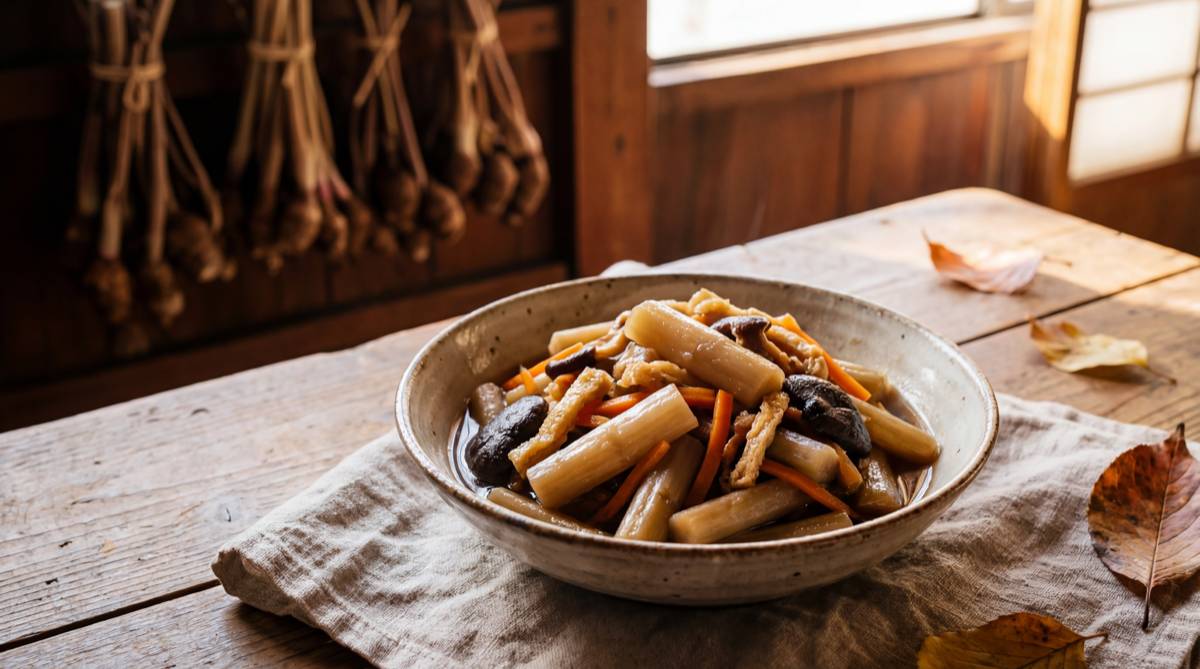
Imogara (also called zuiki) are the dried stems of taro plants.
In autumn, the harvested taro stems would be bundled and hung under the eaves to dry -- a quintessential autumn scene in Tohoku.
Rehydrated dried imogara simmered in dashi, soy sauce, and mirin yields a dish with a unique texture and deep, gentle flavor.
It represents the pinnacle of Japan's waste-nothing food philosophy, turning what might be discarded into a delicious preserved food.
Ginger Sweet-Savory Rice Bowl (Fukushima)
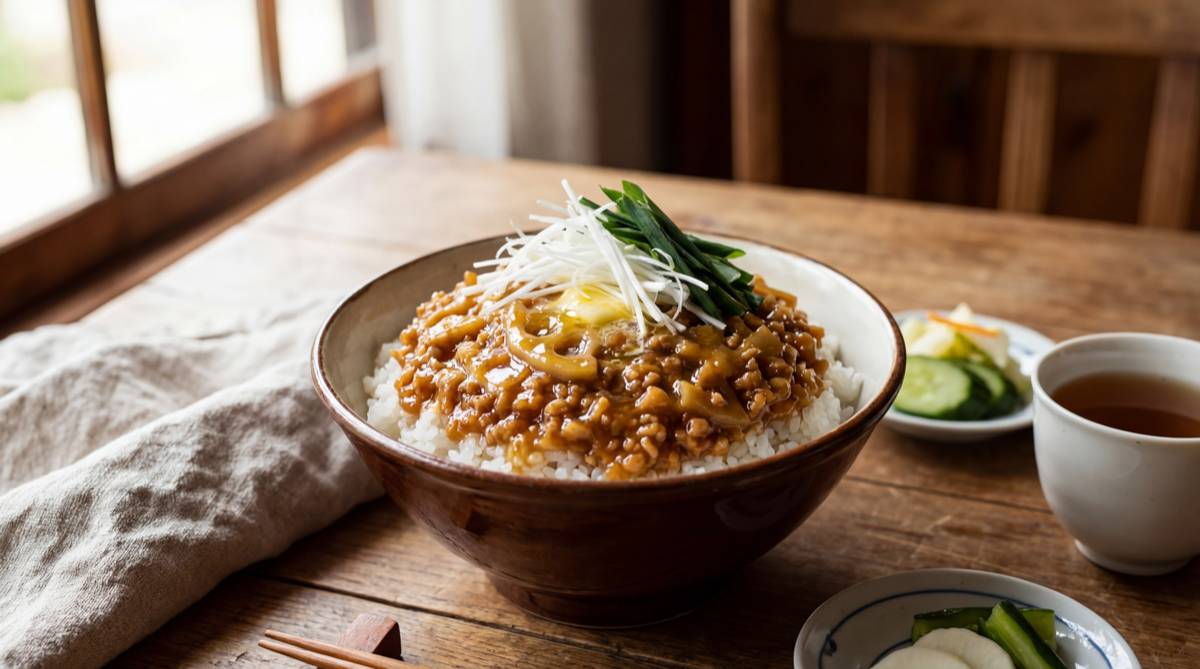
A beloved home-style dish from Fukushima.
The pungent sweetness of ginger in a rich soy-sugar glaze pairs perfectly with plain steamed rice, making for a simple yet satisfying bowl.
No special ingredients needed -- just fresh ginger and basic seasonings are all it takes to recreate grandma's flavor.
Zenmai no Nimono -- Simmered Royal Fern (Niigata)
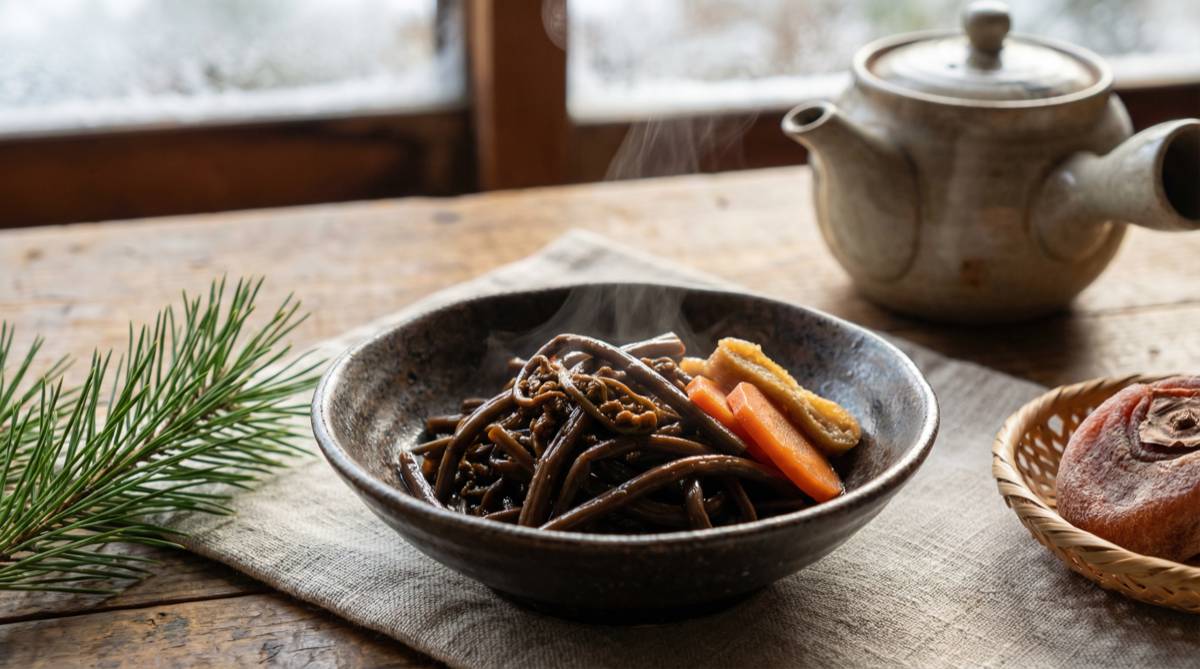
When spring arrives in the mountains of Niigata, wild vegetable foraging season begins.
Zenmai fern simmered with fried tofu (aburaage) draws out deep umami flavors, delivering the fragrance of the mountains and the gentle bitterness of spring directly to the dinner table.
Grandma would carefully ration her dried zenmai throughout the year, bringing a taste of the mountains even to the winter table.
What Tohoku Kitchens Have in Common
Although ingredients and seasonings differ across Tohoku, one thread unites them all: the wisdom to endure harsh winters.
Making preserved foods, using dried ingredients creatively, devising warming meals from simple ingredients -- the regional dishes born from this way of life are filled with the strength and tenderness of Tohoku's grandmothers.
What country grandmothers ate every day -->
Guide to regional Japanese home cooking -->