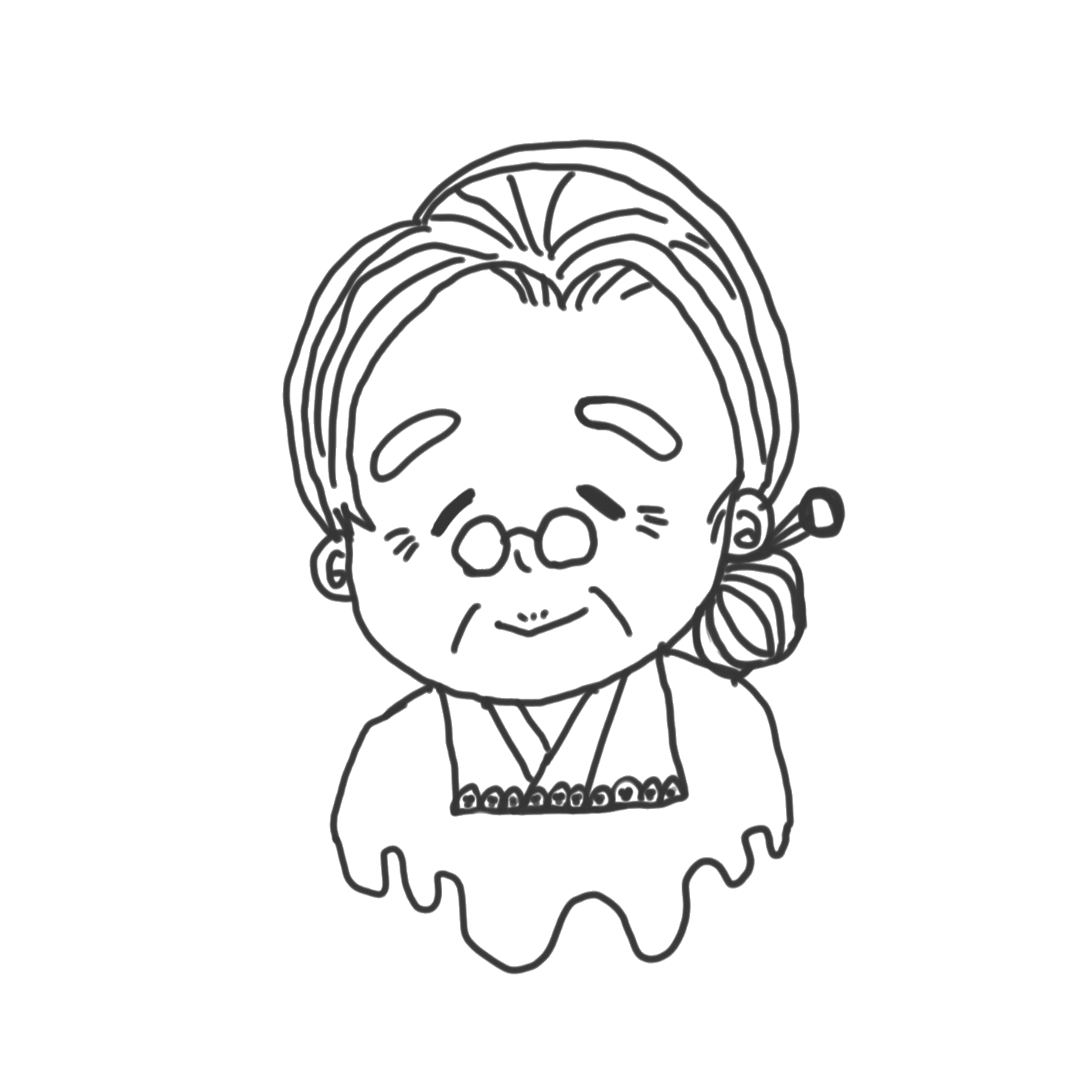
 Grandma's Recipes
 The Science Behind Grandma's Intuitive Cooking | Why She Never Needed Measuring Spoons
Measuring spoons didn't exist in Japan until 1948
"A splash" of soy sauce, "a pinch" of salt, "just enough" sugar. Grandma's recipes never included numbers. This wasn't mere guesswork -- it was a form of embodied science refined over a lifetime of cooking.
"A splash" of soy sauce. "A pinch" of salt. "Just enough" sugar.
Grandma's recipes never included numbers. As a child, this puzzled me. How could she make the same dish taste the same every time without measuring anything?
The answer wasn't "intuition." It was science -- encoded in her body through decades of practice.
How Much Is "A Pinch"?
The Japanese "hitotsukami" (a pinch) actually has a precise definition: the amount picked up between the thumb, index finger, and middle finger -- approximately 1 gram. "Shosho" (a smaller pinch) uses just the thumb and index finger, yielding about 0.5 grams.
Grandma wasn't skipping measurement -- her fingers were the measuring spoons.
Of course, individual variation exists. Culinary science studies have measured "a pinch" of salt ranging from 0.7g to 1.4g across different people. These subtle physical differences between each grandmother's pinch formed the very foundation of each family's distinctive "house flavor."
Measuring Spoons Are a Surprisingly Recent Invention
Standardized measuring spoons didn't enter Japanese home kitchens until after World War II. Nutritionist Aya Kagawa introduced the concept of standardized cooking measurements using cups and spoons in 1948, which later spread nationwide through cooking shows.
Before that, no Japanese kitchen had measuring spoons or cups. Grandmothers cooked by feel not because they were careless, but because it was the only -- and most practical -- method available.
In other words, cooking by eye was not an "analog compromise" but rather a sophisticated form of bodily knowledge that humans developed in an era before measuring instruments existed.
How the Brain "Automates" Cooking
Cognitive science tells us that repeated actions are stored as "procedural memory" in the cerebellum and basal ganglia. It is the same mechanism as riding a bicycle or playing a musical instrument -- the body moves automatically without conscious thought.
Research on experienced cooks has shown that seasoned practitioners are sometimes more accurate when adding salt "by feel" than when consciously measuring. Conscious control can actually reduce precision -- a phenomenon known as "choking" in sports psychology.
The salt grandma added "by feel" was actually a precision measurement carved into her brain and hands through thousands of cooking sessions.
The Five Senses as Measuring Instruments
Cooking by eye extends far beyond the fingers.
Heat levels were judged by sound: "When it sounds like this, it's ready." Sugar by taste: "When it's this sweet." Soy sauce by sight: "When it's this color." Grandma's cooking was a full-body measurement system engaging sight, hearing, smell, taste, and touch.
Modern recipes specify "2 tablespoons" so that anyone -- even without sensory experience -- can reproduce the dish. Grandma never needed that translation.
The Concept of "Tacit Knowledge"
Philosopher Michael Polanyi wrote in 1966, "We can know more than we can tell," coining the term "tacit knowledge" for knowledge that cannot be articulated in words.
Grandma's cooking by eye is a textbook example of tacit knowledge. Ask her "How do you measure?" and the only answer is "I just know." This isn't laziness -- it is knowledge so deeply embedded in the body that language cannot capture it.
Management scholar Ikujiro Nonaka later developed this concept, emphasizing the importance of converting experts' tacit knowledge into explicit knowledge for the next generation. Those childhood hours spent helping in grandma's kitchen, learning by watching and doing, were knowledge transfer in its purest form.
How to Get Closer to Grandma's Flavor
This is why perfectly recreating "grandma's taste" is so difficult. Even a meticulously written recipe cannot capture the sensory memories.
But there is one way to get closer:
Keep cooking.
Make the same dish 10 times, 20 times. Your fingers will learn. Your eyes will learn. Your nose will learn. At the end of that journey, grandma's same sensory wisdom will be waiting.
Using measuring spoons is not a bad thing. But the day you set them aside and cook "by feel" -- that is when grandma's memory lives on in you.