 Grandma's Recipes
 Japanese Regional Home Cooking | A Guide to Traditional Recipes from Across Japan
From Tohoku to Kyushu -- local wisdom in every bite
Every region of Japan has its own traditional dishes that grandmothers have been making for generations. These recipes, rich with local ingredients and ancestral wisdom, continue to nourish family tables today. Here we present a journey through Japan's regional home cooking, with recipes you can make in your own kitchen.
What Is Regional Japanese Cuisine?
Regional cuisine -- known as "kyodo ryori" in Japanese -- refers to dishes born from the climate, geography, and local ingredients of a specific area.
Before refrigeration and modern transportation, people had to work creatively with whatever their land provided.
Pickling in salt to extend shelf life, making wild mountain plants palatable, creating quick meals to eat between farming tasks...
These accumulated life skills built up over centuries to form the regional cuisines we know today.
Grandmothers naturally inherited these traditions, preserving them as the everyday flavors of home.
Here we introduce representative dishes from across Japan, from Hokkaido to Kyushu.
Hokkaido | Torikuri (Chicken and Chestnut Stew)
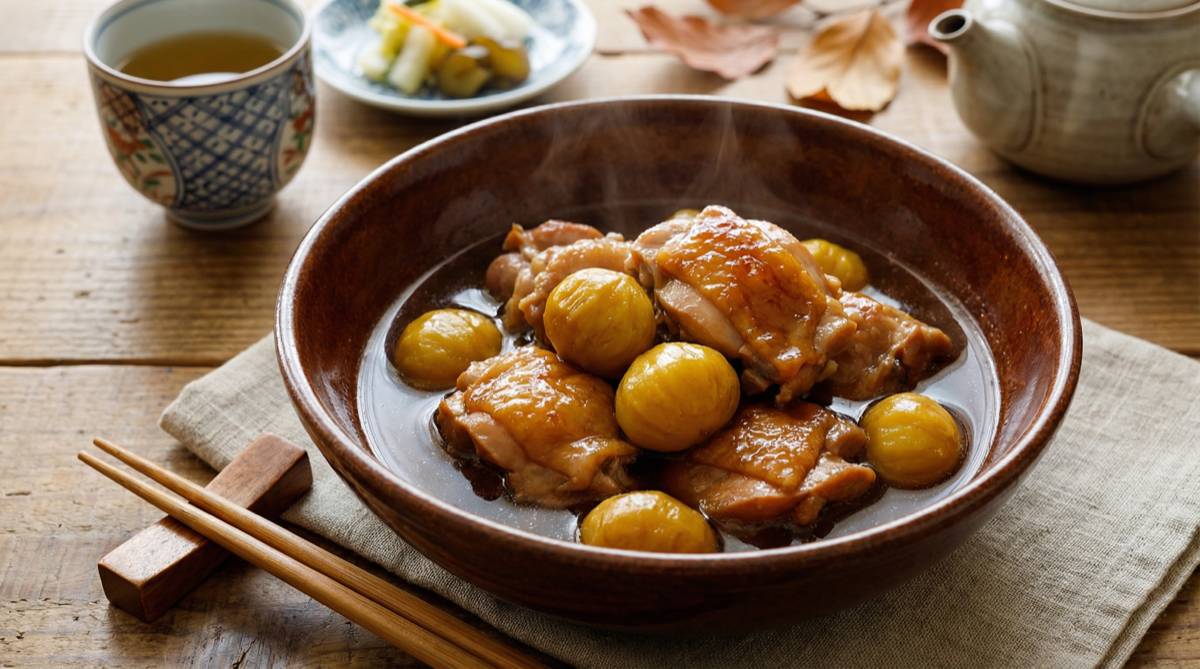
Dating back to Hokkaido's pioneer era, "torikuri" is a rich stew combining chicken and chestnuts.
It captures the bounty of Hokkaido's land in a simple, hearty dish with bold flavors.
Tohoku | Dried Taro Stem and Zenmai Fern
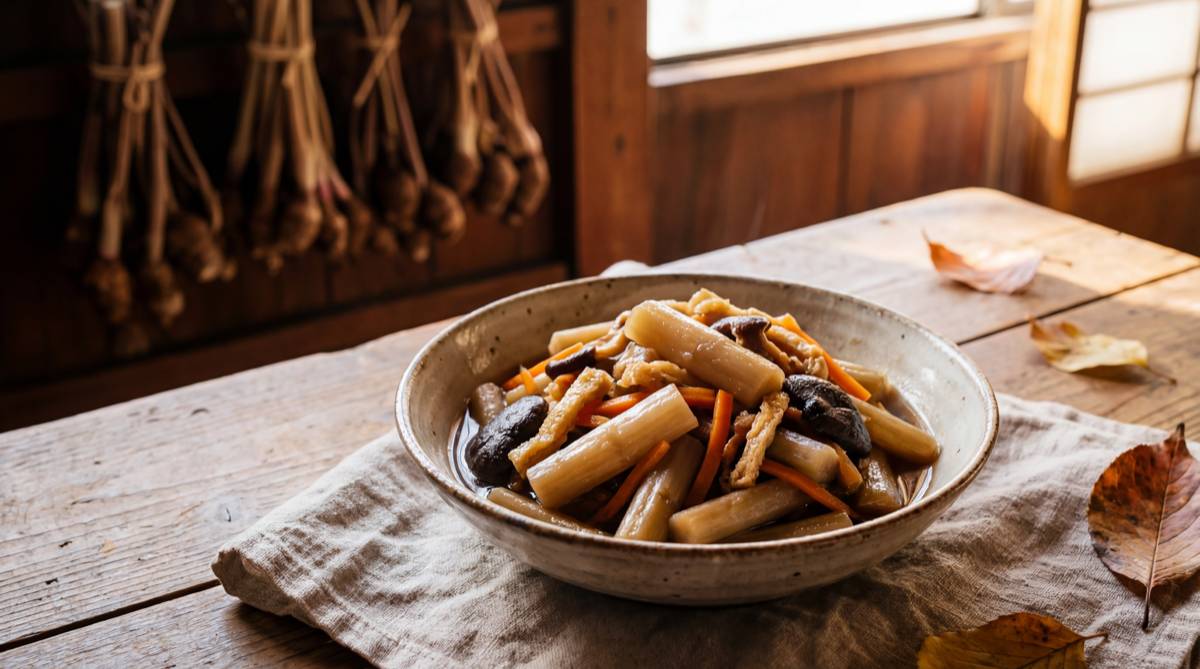
Miyagi grandma's simmered dried taro stems (imogara) is a humble dish that embodies Tohoku's waste-nothing philosophy.
The dried stems of taro plants are rehydrated and simmered -- old-fashioned preserved food wisdom at its finest.
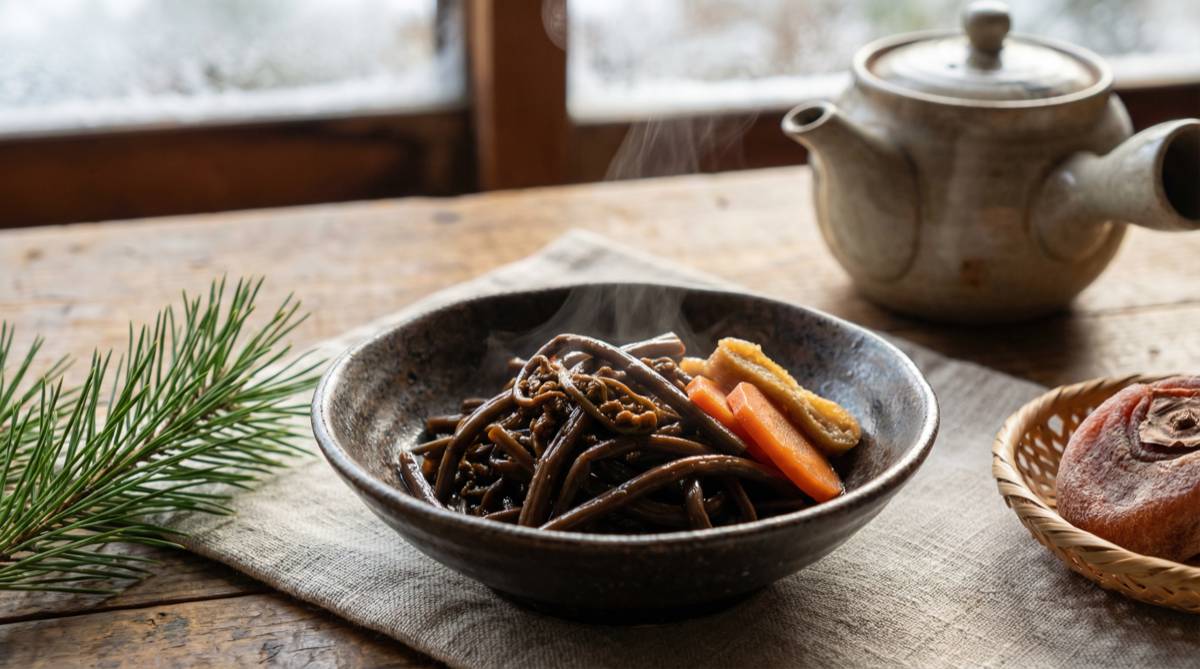
In the mountains of Niigata, simmered zenmai fern appears on spring tables.
Pairing it with fried tofu (aburaage) deepens the umami, creating a dish that makes rice disappear quickly.
Kanto | Nobiru with Vinegar Miso
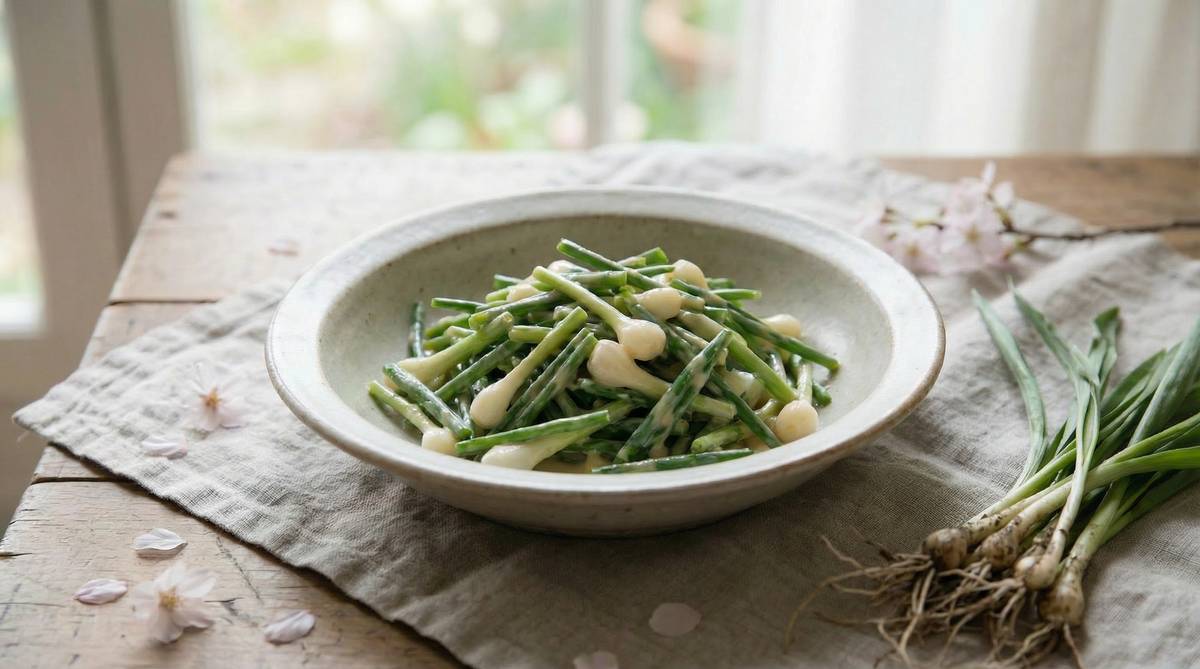
Nobiru (wild garlic) grows naturally in the fields and hillsides near Tokyo.
This vinegar-miso dressed salad is a fleeting spring delicacy.
Its distinctive sharpness and aroma herald the arrival of the new season.
Hokuriku | Kombu Stew (Gottani)
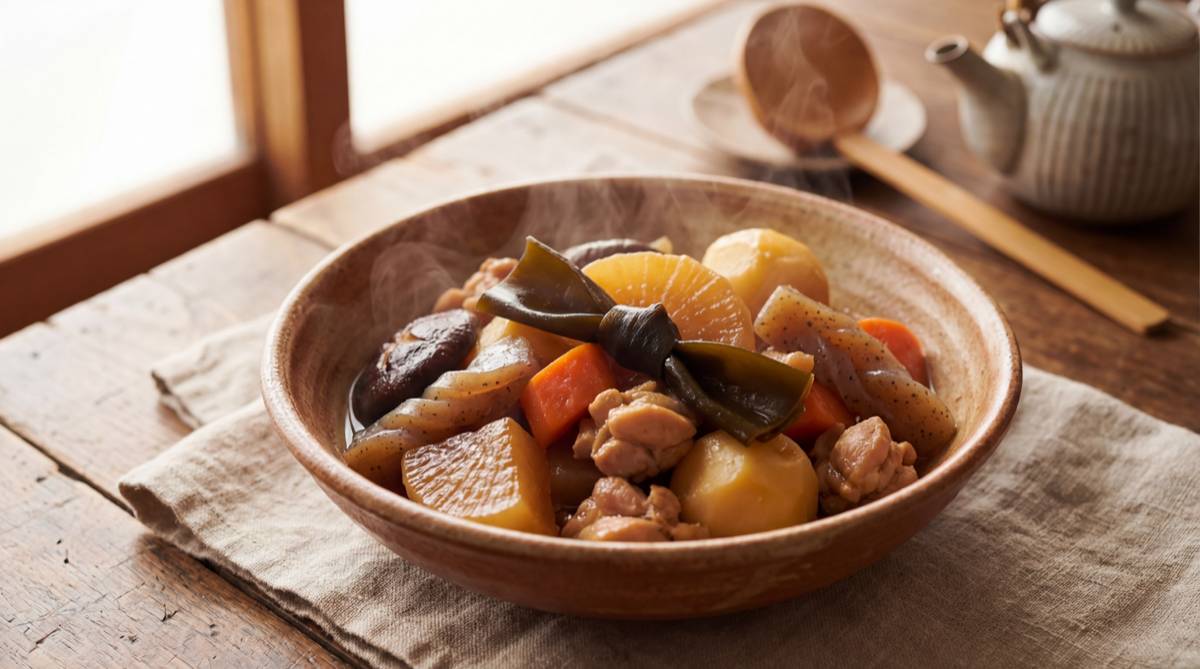
Toyama Prefecture is known for its exceptionally high kombu (kelp) consumption.
"Gottani" is a hearty stew loaded with kombu, producing a naturally thick, deeply savory broth.
This culinary tradition traces back to the kitamaebune trade ships that brought kombu from Hokkaido centuries ago.
Kansai | Ikanago no Kugini (Simmered Sand Lance)
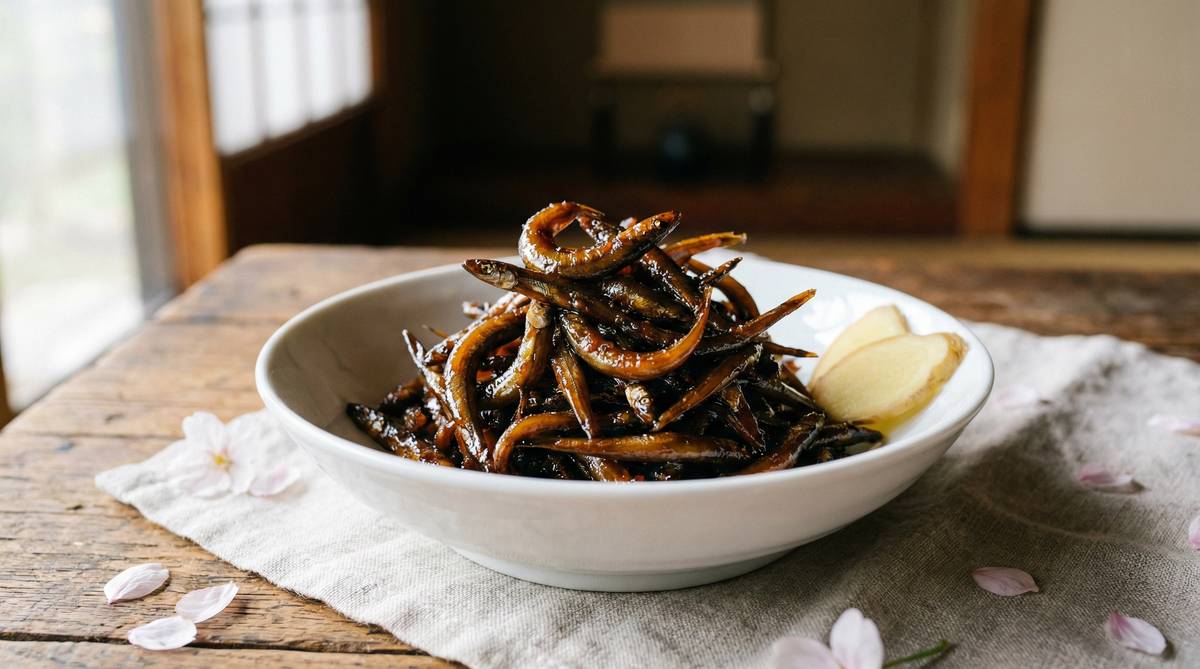
Ikanago (sand lance), harvested from the Harima Sea off Hyogo Prefecture, is simmered in a sweet-savory glaze to make "kugini" -- an essential spring kitchen tradition.
Once prepared, this preserved dish serves as a perfect rice topping for weeks.
The tradition of jarring batches to share with relatives and friends continues to this day.
Shikoku | Sea Bream Rice and Kakimaze
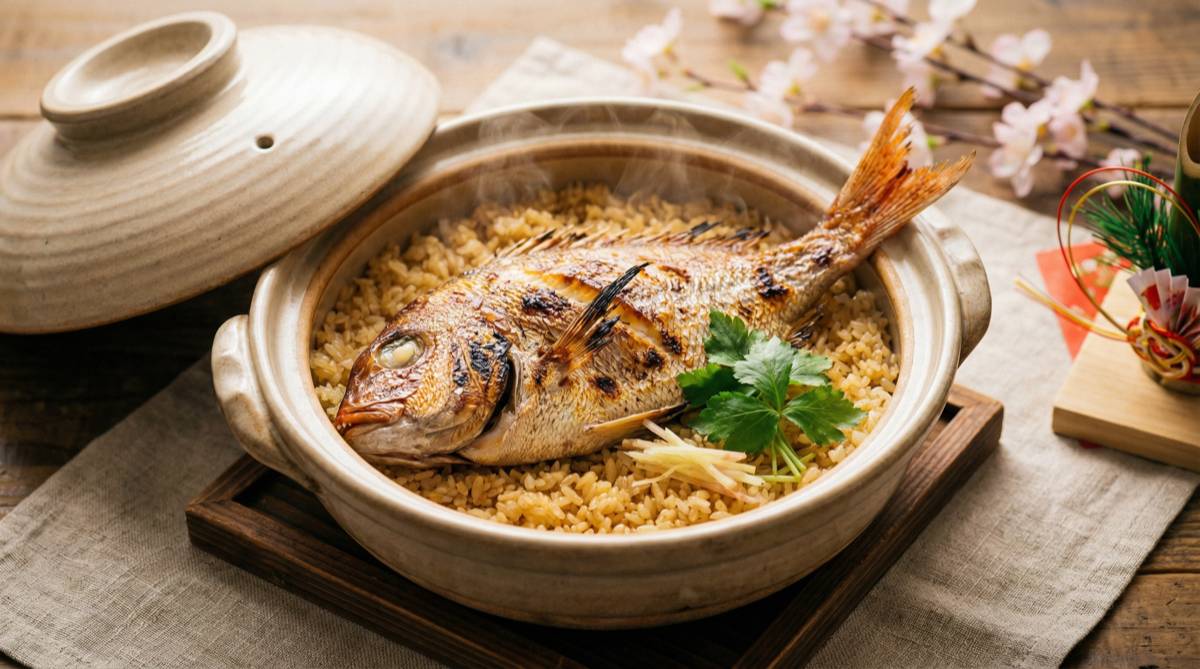
Ehime's taimeshi (sea bream rice) from Uwajima features a whole sea bream cooked with rice -- a spectacular dish worthy of celebrations.
It showcases the full bounty of the Seto Inland Sea.
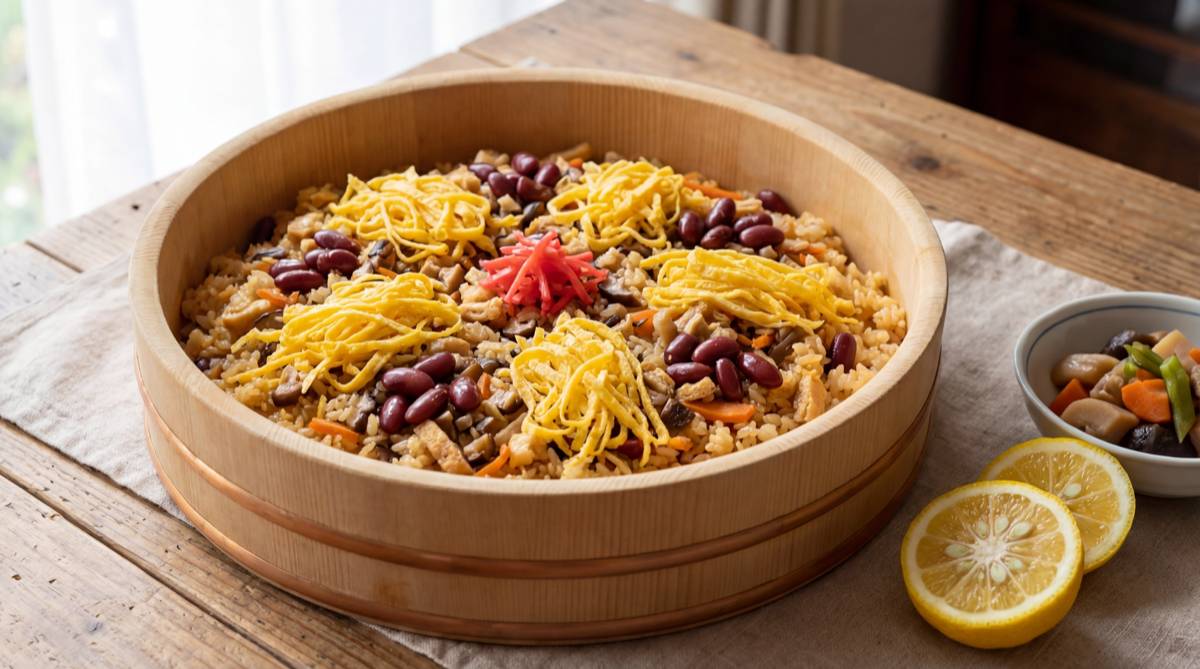
Tokushima's "kakimaze" is a fragrant mixed rice dish brightened with yuzu citrus.
Kintoki beans and vegetables are folded into seasoned rice and finished with fresh yuzu juice.
Traditionally made for festivals and special occasions, it is a dish that brings joy to the table.
Kyushu | Gameni (Braised Chicken and Root Vegetables)
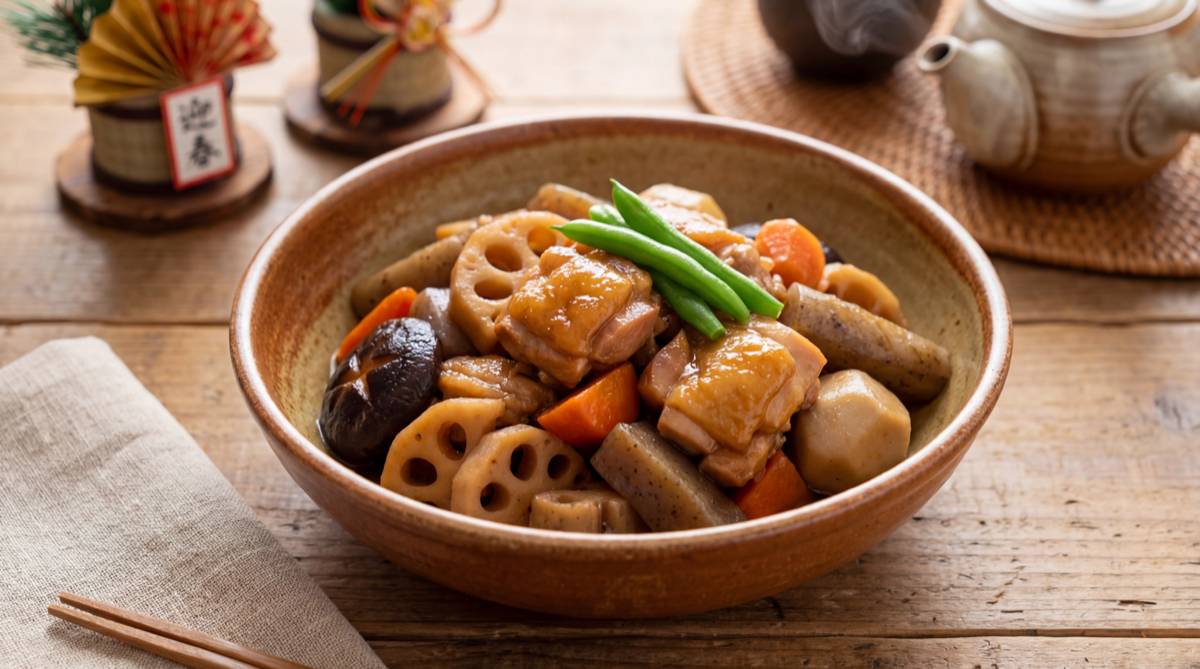
Fukuoka's signature dish gameni (also known as chikuzen-ni) is a hearty braise of chicken with burdock root, carrot, lotus root, taro, and konnyaku.
Essential for New Year and celebrations, the ingredients are first stir-fried then simmered, concentrating the umami into a sweet-savory sauce that pairs perfectly with rice.
Enjoying Regional Cuisine at Home
Regional dishes taste best when made with seasonal, local ingredients.
However, modern online shopping makes it possible to source ingredients from across Japan (or the world), bringing authentic flavors within reach of any home kitchen.
The key is not to stress about perfect authenticity.
Cook with the spirit of the dish using whatever ingredients you can find -- that is the true secret to enjoying regional Japanese cuisine.
After all, grandmothers themselves always improvised with what was available.
What country grandmothers ate every day -->
Grandma's simmered dish recipes and the golden ratio -->